
 English
 Spanish
 German
 French


The CO2 Risk Hiding in Your Beer Cellar, and What to Do About It
A CO2 leak in a beer cellar is more dangerous than most venue owners realize, but managing that risk is easier than you’d expect. How can a monitoring system protect your staff and your business?
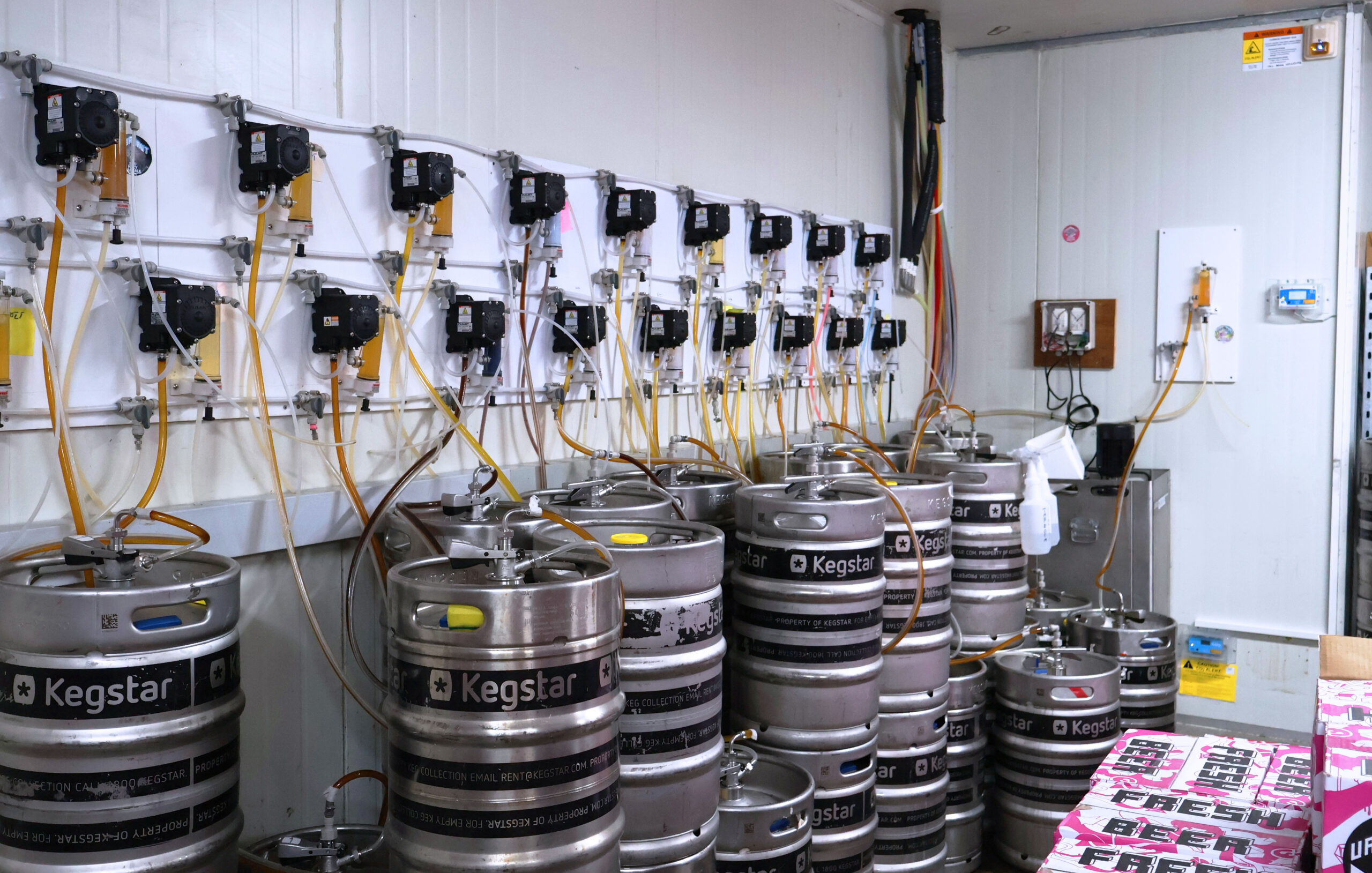
CO2 monitoring in a working beer cellar helps protect staff from dangerous CO2 levels
The Silent Risk in Every Beer Cellar
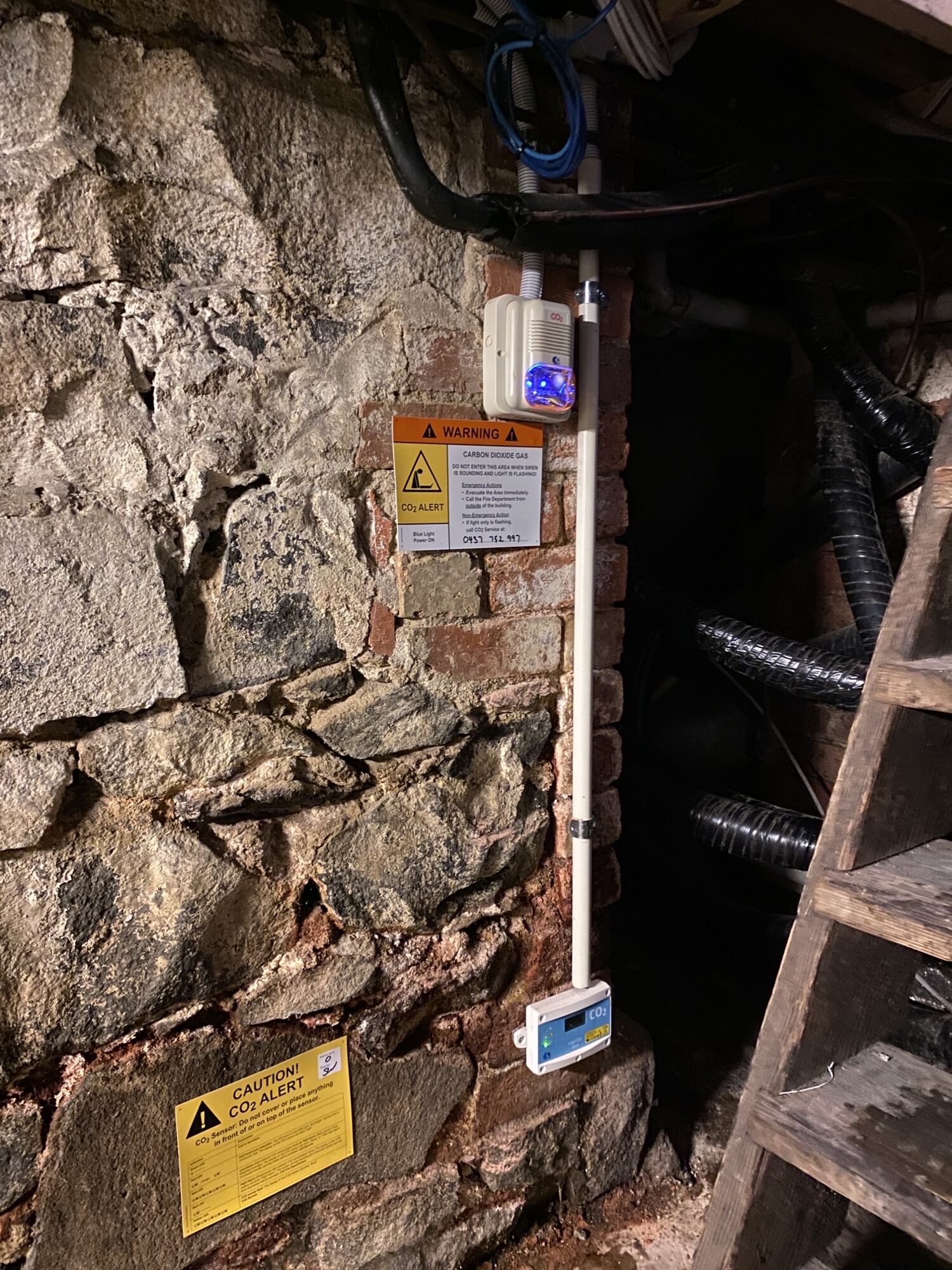
Early warning of hazardous CO2 levels before entering the cellar. Credit: Statewide Beer Systems
Most venues take fire safety seriously without a second thought. It is standard to have extinguishers, alarms, and an evacuation plan. Gas safety deserves the same seriousness, but it rarely gets it. Just because the risk is invisible does not make it any less dangerous.
CO2 is roughly 1.5 times denser than air, so when it leaks, it doesn’t disperse. It sinks and settles into low-lying, enclosed spaces, like the cellars most pubs and bars rely on to keep beer cool. It is also colorless and odorless, so there is no warning before concentrations turn dangerous. At 4%, the atmosphere is classified as an immediate danger to life and health. At 7%, dizziness, vomiting, and headaches. At 10%, unconsciousness, then death.
Draught systems rely on CO2 to push beer from keg to tap, usually stored in cylinders or bulk tanks and piped straight to where it is dispensed. A leak can start almost anywhere along that path, whether at the tank, the cylinder, or the keg connections themselves. Some venues also run nitrogen alongside CO2, which carries its own risk by displacing oxygen.
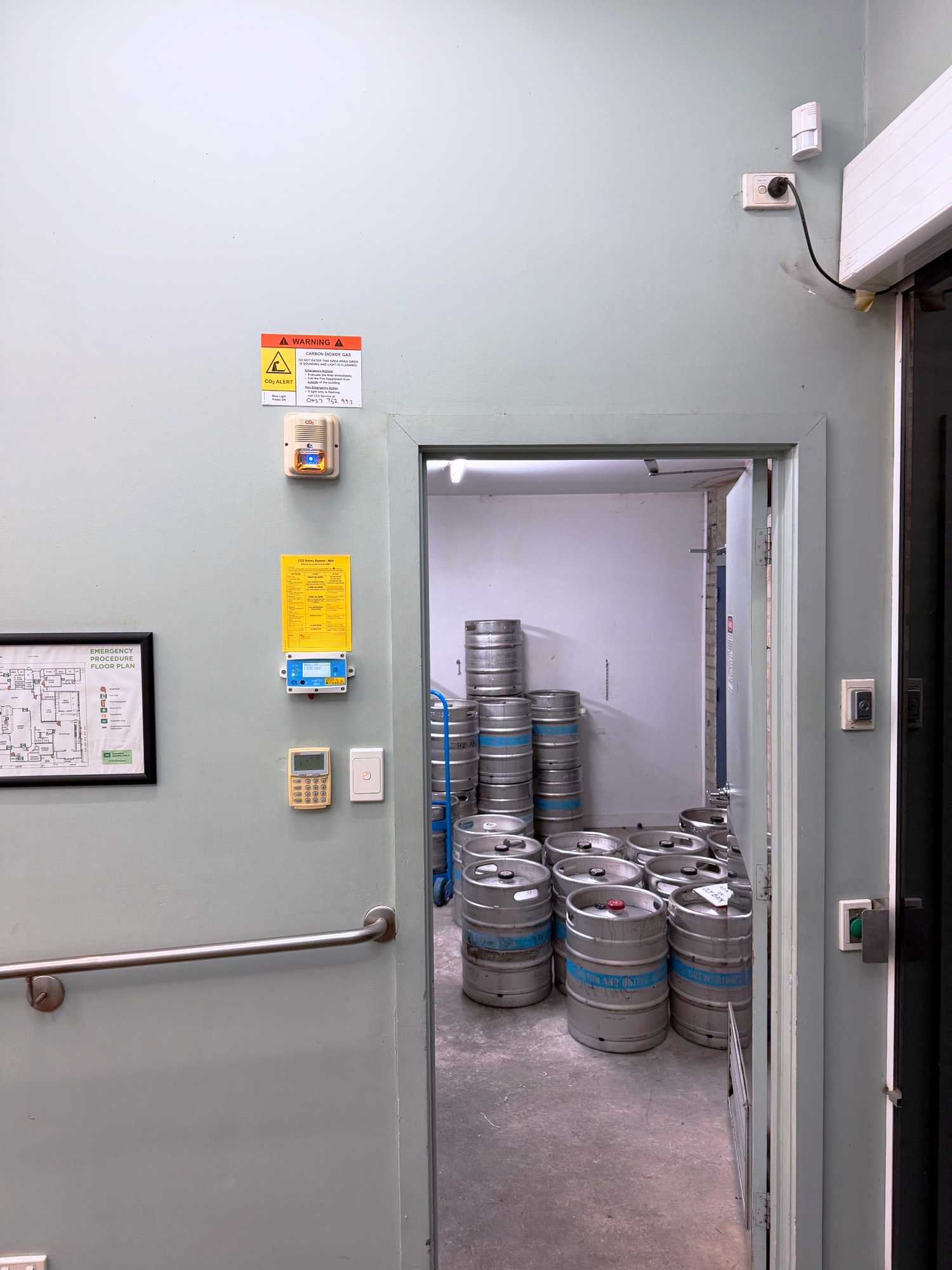
CO2 monitoring installed outside the beer cellar entrance. Credit: Statewide Beer Systems
Picture a typical busy night: the bar is full, beer is flowing, and someone has to run downstairs to change a keg. Without a monitoring system, they have no way of knowing whether CO2 has built up before they open the door. If something goes wrong, the responsibility falls on the owner who failed to put safeguards in place.
Bar staff aren’t the only ones at risk during a busy shift. Technicians who service beer lines are often the first to arrive at a venue, sometimes letting themselves into a cellar as early as 6 AM, before anyone else arrives. That’s why it’s key that these teams are trained to recognize the signs of CO2 exposure and O2 depletion, and how to respond if a leak is suspected.
It’s not uncommon for these technicians to encounter multiple cases a year where a CO2 leak could have exposed someone to a dangerous atmosphere, had a monitoring system not caught it in time. As a venue owner, you don’t want to be the one on the front page of the newspaper because a disaster happened in your workplace.
Despite the well-documented risk, only a small percentage of beer cellars worldwide are estimated to have CO2 monitoring systems. Most of the venues that do are larger, multi-site operators with dedicated health and safety resources. Smaller, single-venue operators remain the most exposed.
Cost is often flagged as a hurdle to wider adoption, but that’s largely a perception issue. Installing a monitoring system isn’t expensive. What is expensive is the alternative. Running out of CO2 can disrupt your business, but a gas leak can put lives at risk. Protecting both people and operations is essential.
That’s where LogiCO2 comes in. “We’re in the business of creating safer workplaces and making sure people get home safe,” said Kristoffer Eklund Cuestas, LogiCO2’s Business Manager. “It comes down to awareness, prevention, and protecting lives.
The Silent Risk in Every Beer Cellar
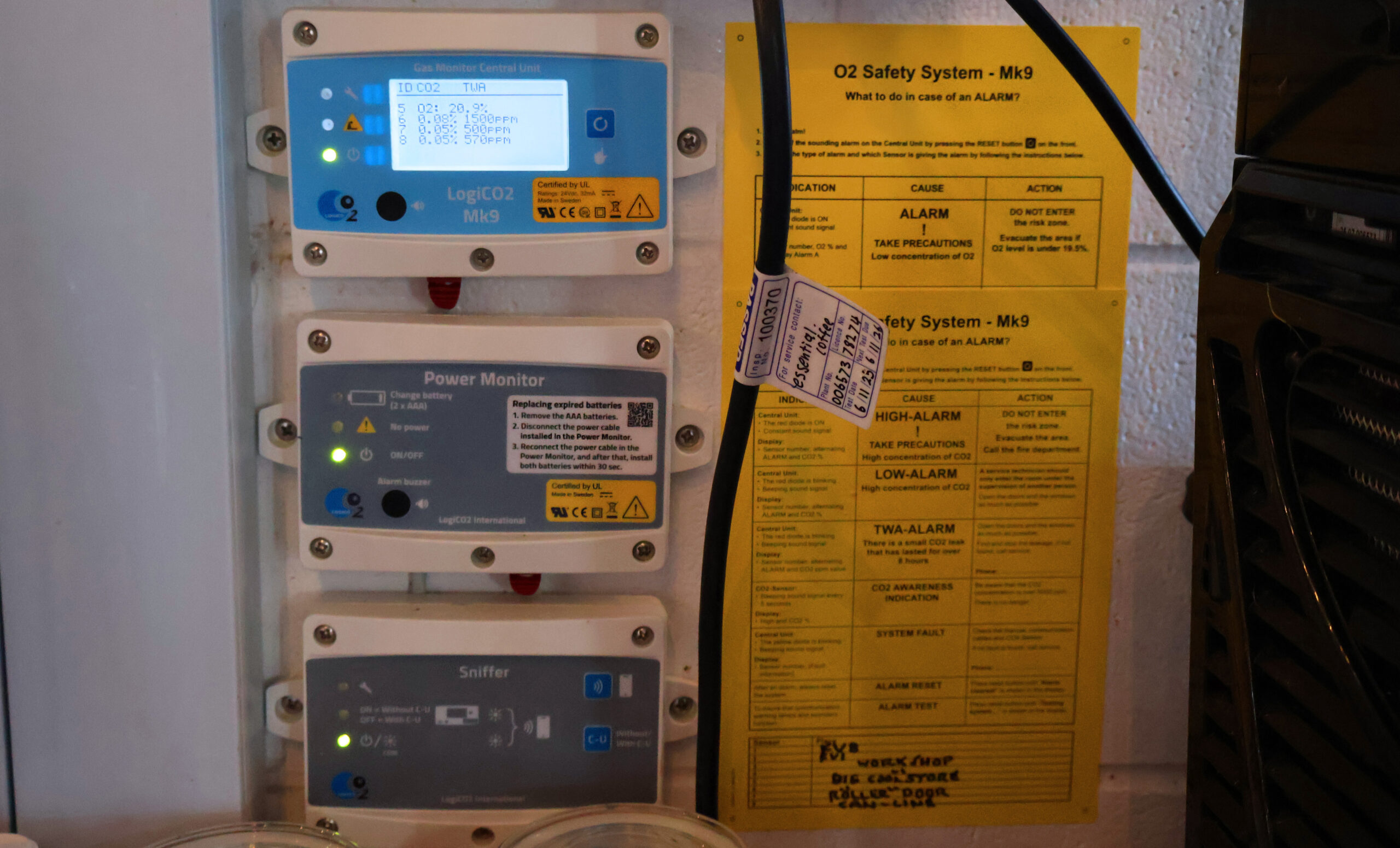
LogiCO2 central unit, Power Monitor and Sniffer installed as part of a fixed CO2 safety system
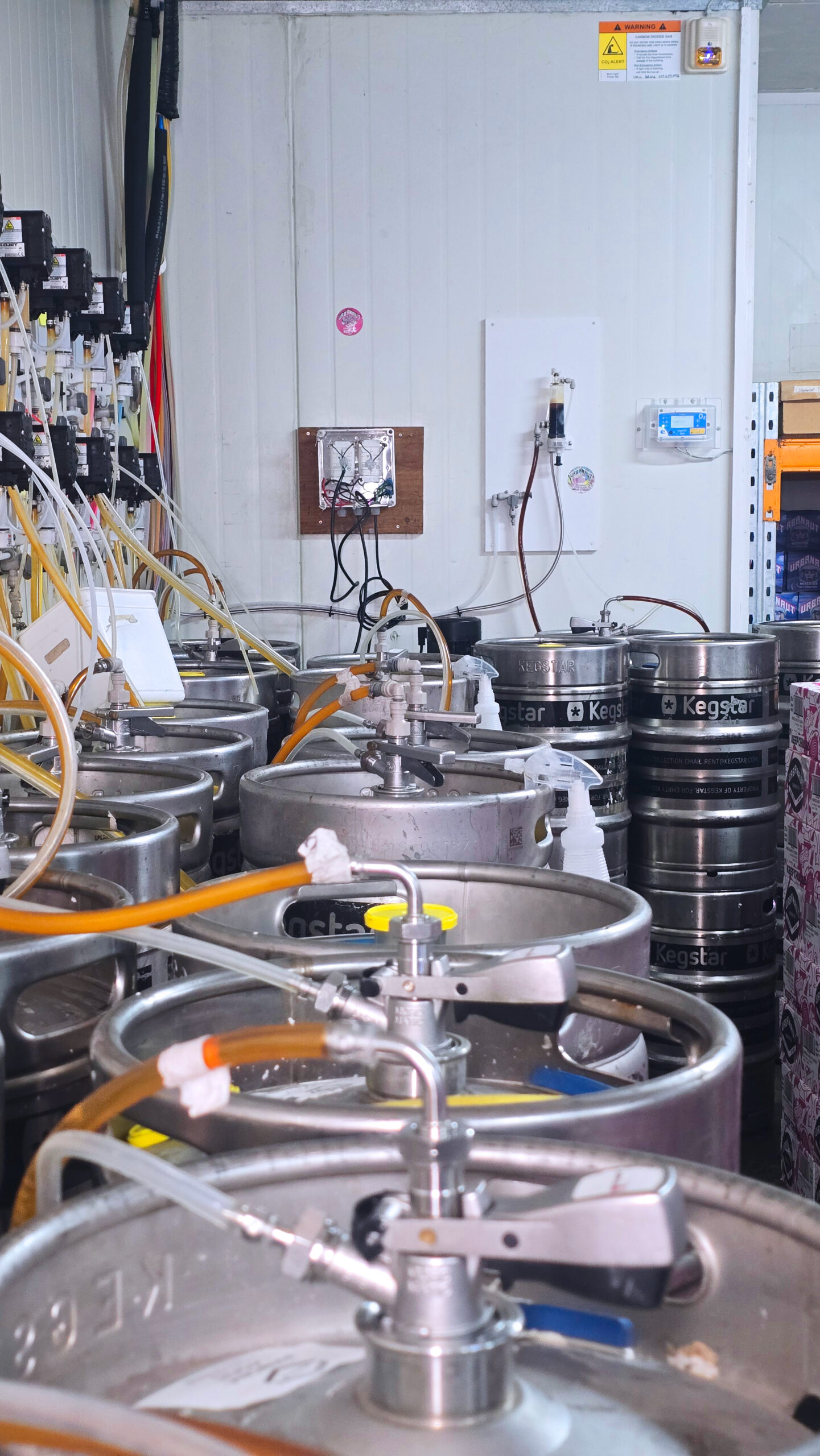
O2 monitoring in a beer cellar
With one LogiCO2 central unit, customers can connect multiple sensors in any combination of CO2 and O2 monitoring. Thanks to LogiCO2’s plug-and-play design, additional features such as horn/strobes, traffic lights, and shut-off valves can be easily added, creating a flexible safety system tailored to each customer’s needs.
The system can also connect further afield: to a building’s management system via a Sniffer Modbus gateway, or to an extraction system through a LogiCO2 Remote Connection Box (RCB), an accessory that transmits alarm signals to external devices, such as an external CO2 shut-off valve, mechanical ventilation, extraction fans, or fire-alarm panels.
Maintenance staff can also use the portable LogiCO2 Scout as an additional safety tool to check CO2 levels before entering a confined space, such as a beer cellar. This is done by attaching the Scout to the included foam ball and rolling it into the space to check levels first. It can also be lowered into tanks or other hard-to-reach spaces.
Bluetooth connectivity and the free LogiCO2 app let users view readings remotely, from up to 40 meters away. The Scout monitors current CO2 levels, short-term exposure, and Time-Weighted Average (TWA).

LogiCO2 Scout for portable CO2 monitoring. Credit: Statewide Beer Systems
The Scout complements a fixed monitoring system, but it’s not a substitute. A fixed system protects everyone who passes through a space. It also catches a leak in seconds, saving the CO2 itself – a real, avoidable cost for any venue running draught beer or post-mix.
Getting a fixed system right starts with positioning. A central unit placed somewhere staff actually pass, typically behind the bar, gives them a glance at the readings before anyone heads downstairs. Safety information should sit outside the danger zone, close to the people it’s meant to protect, with visual indicators giving staff added confidence before entering a space.
Staff don’t need to be standing next to a sensor to check it, either. All nearby LogiCO2 Sniffer Bluetooth units connect to a free LogiCO2 app over Bluetooth, so readings, alarm status, and faults can be checked straight from a phone. Every sensor self-calibrates automatically, which keeps maintenance and servicing to a minimum.
The LogiCO2 safety system can be installed with minimal disruption to operations. A typical single-venue setup can be done in half a day. Even a full, multi-floor installation, sensors through the brew house, canning line, and cellar, can go in over a few weeks without shutting the venue down.
Once installed, the safety system escalates through four alarm levels, each calling for a specific response:
- Awareness indication (5,000 ppm/0.5%): a buzzer and warning light signal that CO2 is unusually high, though not yet dangerous.
- TWA alarm (0.5% sustained over eight hours): signals a level that has persisted too long, in line with workplace exposure standards. The response is to ventilate and find the source.
- Low alarm (1.5%): calls for a qualified technician to locate and stop the leak, entering only
with someone else present - High alarm (3%): a continuous alert. Everyone evacuates immediately, and emergency services are typically needed before anyone can safely return.

Alarm instruction sign for the LogiCO2 Mk9/Mk90 safety system
For additional protection, you can add an automatic shut-off valve to the system. It cuts the CO2 supply the moment an alarm triggers and keeps it closed until levels return to safe. This is especially useful for leaks that never trip a high-level alarm. A small, steady leak can drain your entire CO2 supply before anyone even notices. If you don’t address the issue, costs can rise quickly, especially for businesses operating multiple venues.
Running out of CO2 unexpectedly usually means an emergency delivery at premium pricing, plus a beverage system down during service, which can cost more in a single incident than a complete safety system does in a year.
The Silent Risk in Every Beer Cellar
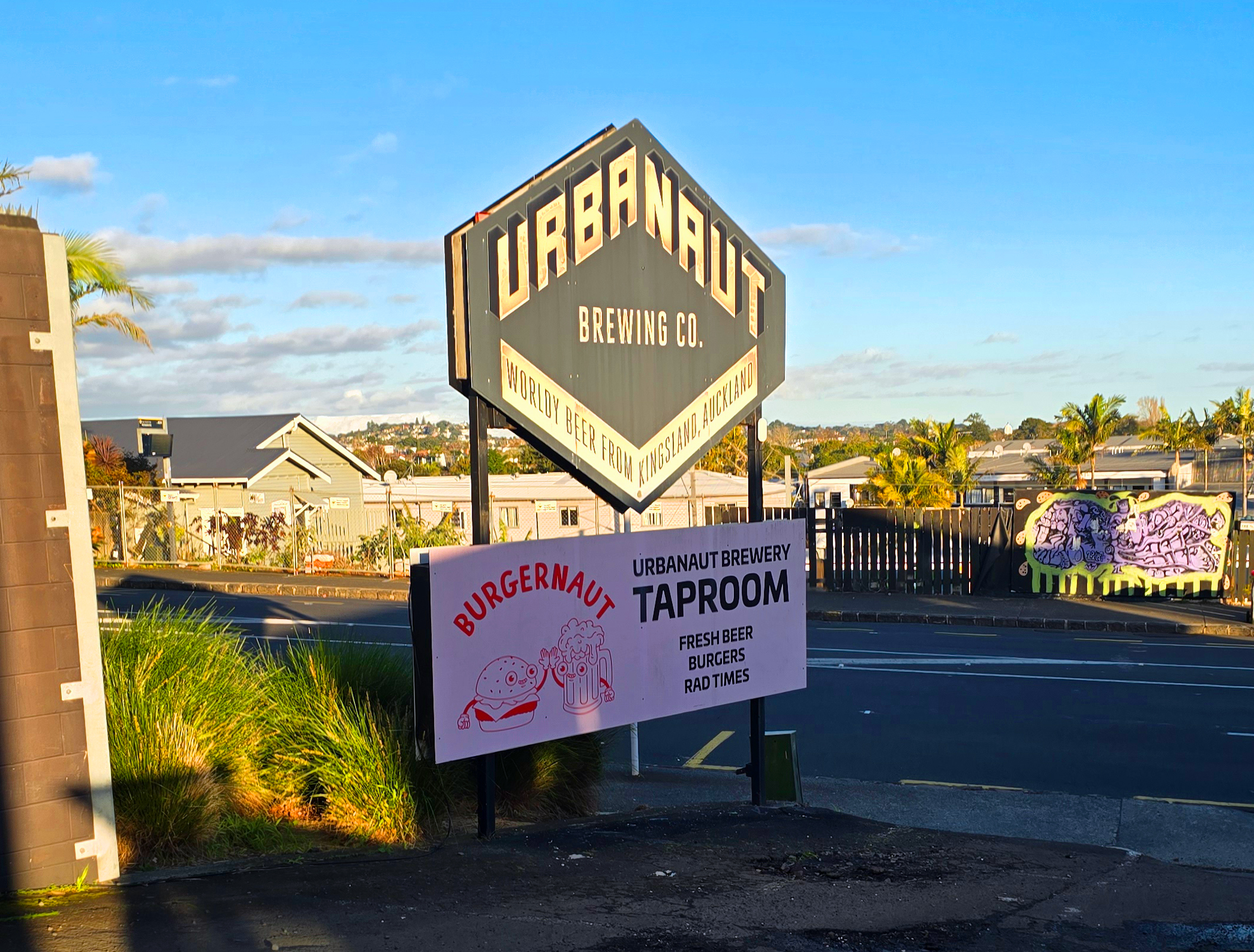
Urbanaut Brewing Co. in Auckland, New Zealand
Urbanaut Brewing Co. in Auckland, New Zealand, is a working example of what good CO2 safety looks like in practice. The Kingsland brewery spans two floors: production, canning, and cool storage on one; a bar, kitchen, and taproom on the other. The public moves freely through a working industrial site most weekends. Fermentation stays active even after the taproom opens and production staff have gone home. That means CO2 keeps building in an area with no one there to notice it.

LogiCO2 Central Unit, Power Monitor and Sniffer Bluetooth installed behind the bar as part of the CO2 safety system
To address this, Urbanaut installed a full LogiCO2 safety system earlier this year. The process started with a walkthrough of the brewery, during which the LogiCO2 team asked Bruce Turner, the brewery’s co-founder, where he was most concerned. From there, they mapped sensor and alarm placement based on how Urbanaut actually runs day to day, rather than a generic template.
The installation only took about three weeks, during one of the brewery’s busiest months, and Turner found the process faster and less disruptive than he’d expected: “They just worked around us and installed it like it was no issue. It was really, really easy.”
The system proved its worth almost immediately. During commissioning, fermentation activity pushed CO2 levels up one Saturday evening. The taproom manager heard an unfamiliar beeping and called Turner, who worked out the cause remotely over the phone, told them to open a few windows, and had the alarm cleared within minutes.
Can You Afford the Risk?
The point of a monitoring system isn’t to make CO2 feel like a constant threat, but the opposite: once installed, it’s one less thing to think about every day. The risk hasn’t disappeared; it’s just being managed in the background.
“If you operate a venue that has a beer cellar without a CO2 monitoring system in place, you are driving without a seatbelt,” says Eklund Cuestas. “It’s not worth the risk.”
Video: New Zealand’s Urbanaut Brewery Puts CO2 Safety on Tap
Go behind the scenes at Urbanaut Brewing Co. in Auckland and see how the LogiCO2 CO2 safety system helps protect both the brewery team and visitors:
Click to download this article
Click to view the Urbanaut Brewery installation layout
Click to read the full article in Pursuit of Hoppiness
Do have any questions or inquiries, feel free to contact us at info@logico2.com or +46 (0)31-695317