
 English
 Spanish
 German
 French


BOC Australia and LogiCO2 Join Forces to Raise the Standard on Gas Safety
BOC Australia has been supplying compressed and bulk gases, chemicals and equipment for nearly a century. Today, as part of Linde, a global industrial gases company operating across more than 80 countries, BOC serves a variety of industries, including healthcare, food and beverage, manufacturing, mining, and energy across Australia and the South Pacific.
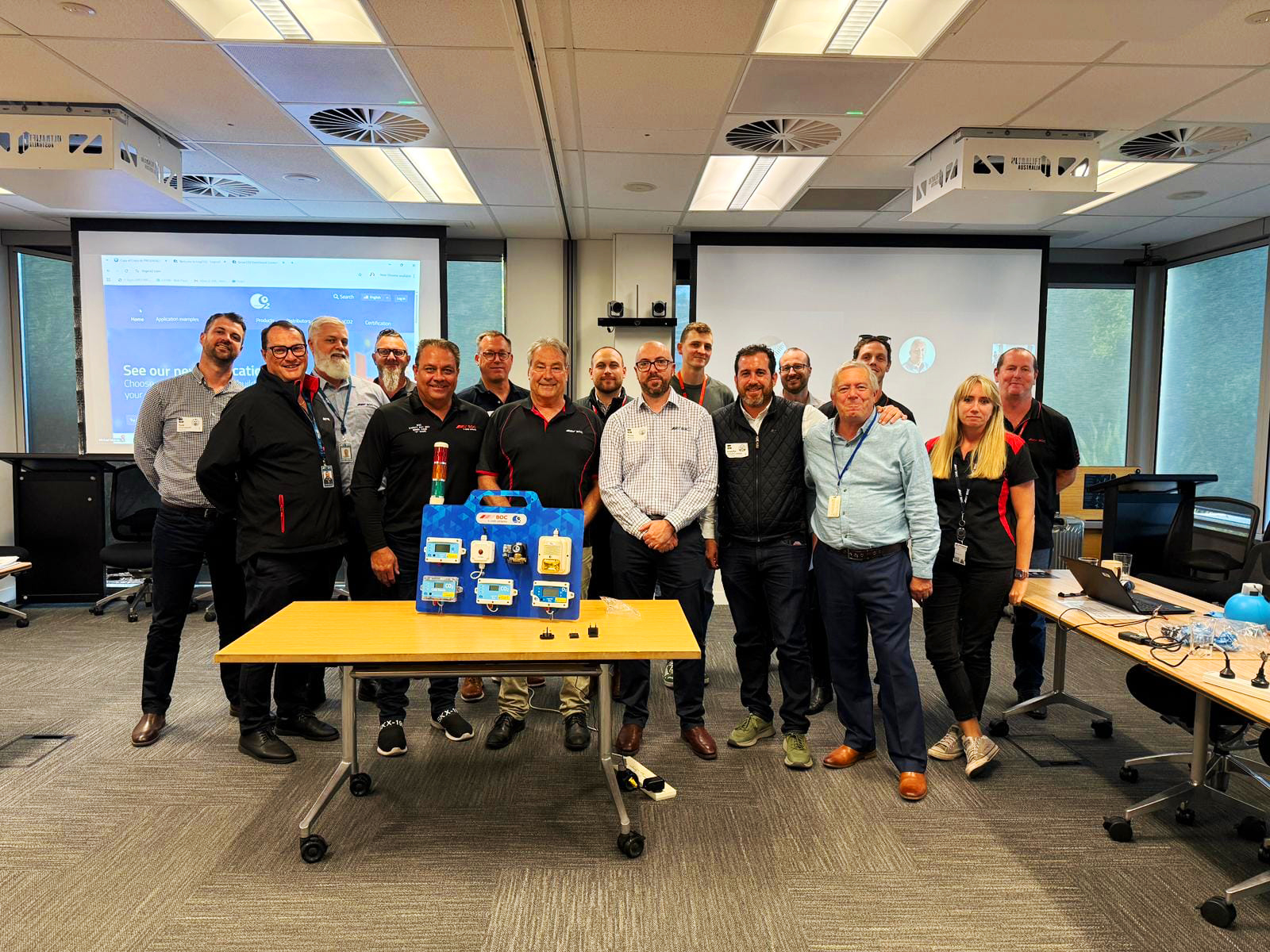
The BOC Australia team together with Kristoffer Eklund Cuestas from LogiCO2
BOC operates with a commitment to continuous improvement in safety, health and environmental performance. The company recognises that gases are inherently hazardous if not managed correctly, making rigorous safety management essential. This focus shapes how it designs equipment, trains employees, supports customers, and develops supply solutions. According to Nathan Johns, Food and Leisure marketing manager at BOC, the company does not treat safety as a compliance exercise, but as a core responsibility to employees, customers, and the wider community.
Why LogiCO2
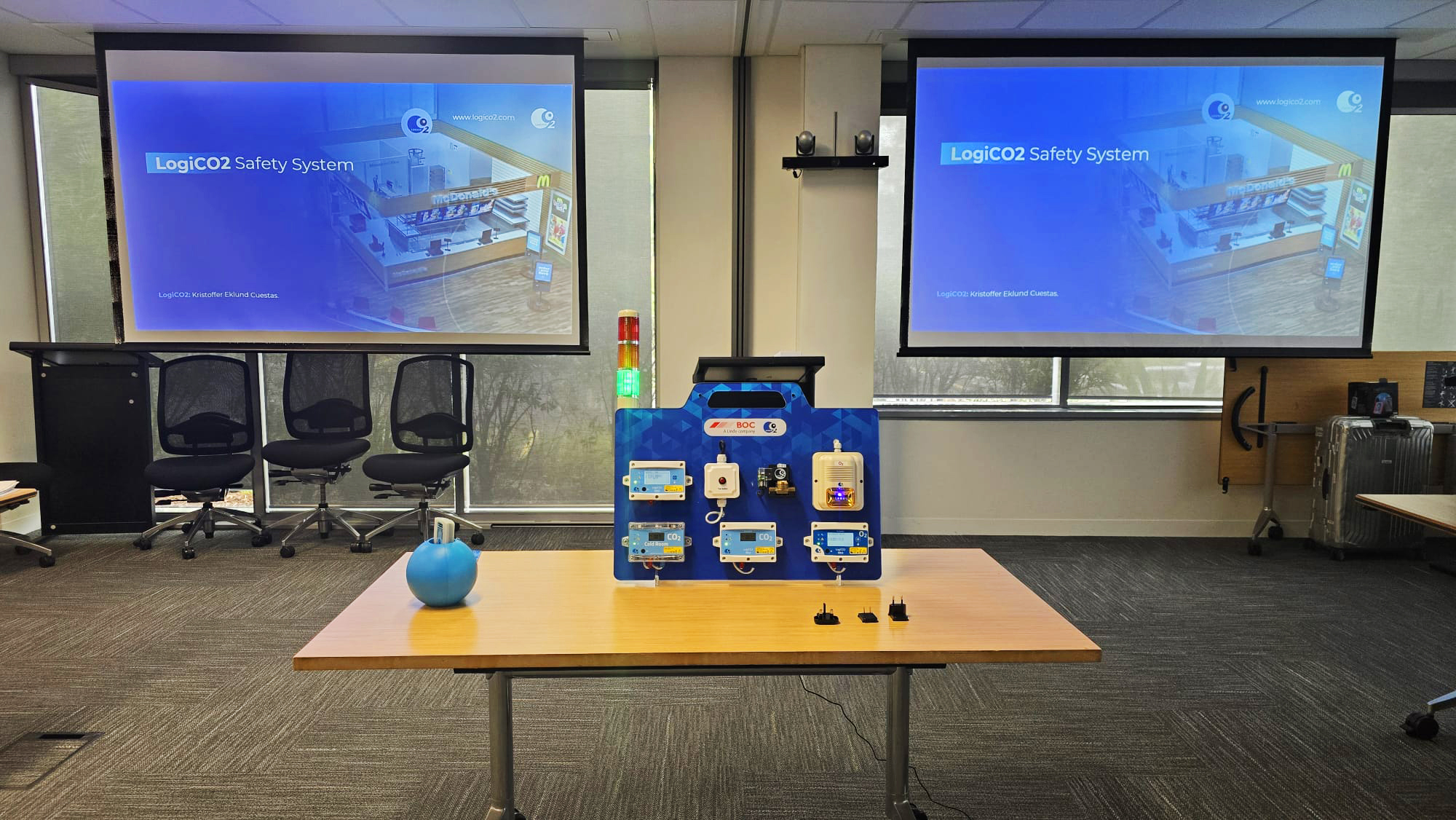
LogiCO2’s demonstration panel showcasing the technology behind its CO₂ safety systems
BOC began working with LogiCO2 after identifying a growing need for fit-for-purpose gas-monitoring solutions, particularly in enclosed and customer-operated environments. LogiCO2 – as a specialist in atmospheric safety monitoring with technical expertise and equipment designed to meet international safety standards – was a natural fit. The local relationship builds off the work already undertaken by LogiCO2 with Linde globally.
Kristoffer Eklund Cuestas, LogiCO2’s business manager for Asia-Pacific and Oceania, explained why this partnership made sense.
“BOC brings strong local market knowledge and established customer relationships, while LogiCO2 brings a dedicated CO₂ safety monitoring system designed to detect leaks, activate alarms, and help customers create safer workplaces,” he said. “From the start, it was clear that both companies share the same priorities.”
What began as conversations in 2024 quickly progressed in 2025, when the LogiCO2 team visited Australia to meet BOC representatives to finalise the partnership. The timing was perfect, arriving just before the updated Workplace Exposure Standards for Airborne Contaminants took effect in November 2025 with a 12-month transition period.
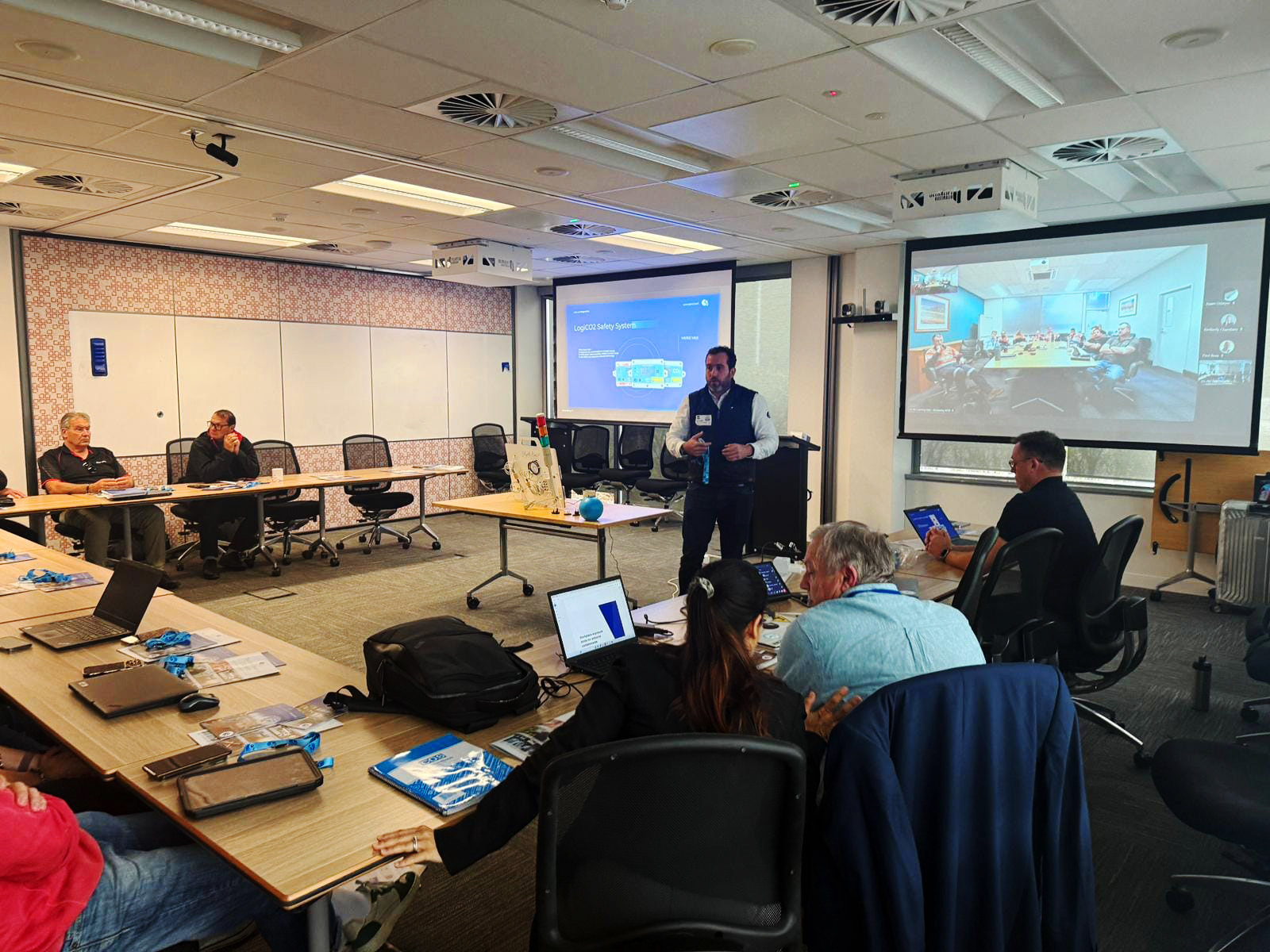
Kristoffer Eklund Cuestas and Ross Olsen from LogiCO2 presenting the company’s CO₂ safety solutions to the BOC Australia team
Why monitoring matters
CO₂ is roughly 1.6 times denser than air, meaning that when a leak occurs, it sinks and accumulates in low-lying and enclosed areas such as basements and beer cellars. Because it cannot be seen or smelled, someone sent to check on an empty cylinder or investigate a dispensing fault may walk directly into a dangerous concentration without any warning. The effects on the human body are severe: at 4 per cent, CO₂ is classified as an immediate danger to life and health, and at 10 per cent, it can lead to unconsciousness and death.
It is precisely this risk that led LogiCO2 to develop its CO₂ safety systems, available in two configurations. The Mk9/Mk90 base set includes a separate central unit for installation outside the monitored area. The Mk90 also offers a stand-alone option, integrating high-intensity alarms directly into the sensor unit, or can be used as part of a base set together with a central unit. Both systems measure CO₂ concentration in enclosed environments and trigger alerts across four distinct alarm levels when thresholds are reached. The value of this monitoring in practice is well documented from BOC’s experience. There have been several cases in which CO₂ monitoring systems provided early warning of leaks, allowing sites to evacuate safely before CO₂ levels became dangerous. In enclosed cellar or dispense areas, alarms have alerted staff to issues that may otherwise have gone unnoticed without a monitoring system in place.
“These systems not only help prevent serious injury or fatalities but also minimise downtime and operational disruption,” said Michael Murray, BOC Australia’s Queensland customer maintenance manager. “However, customers often only fully appreciate their value after seeing them work in real situations.”
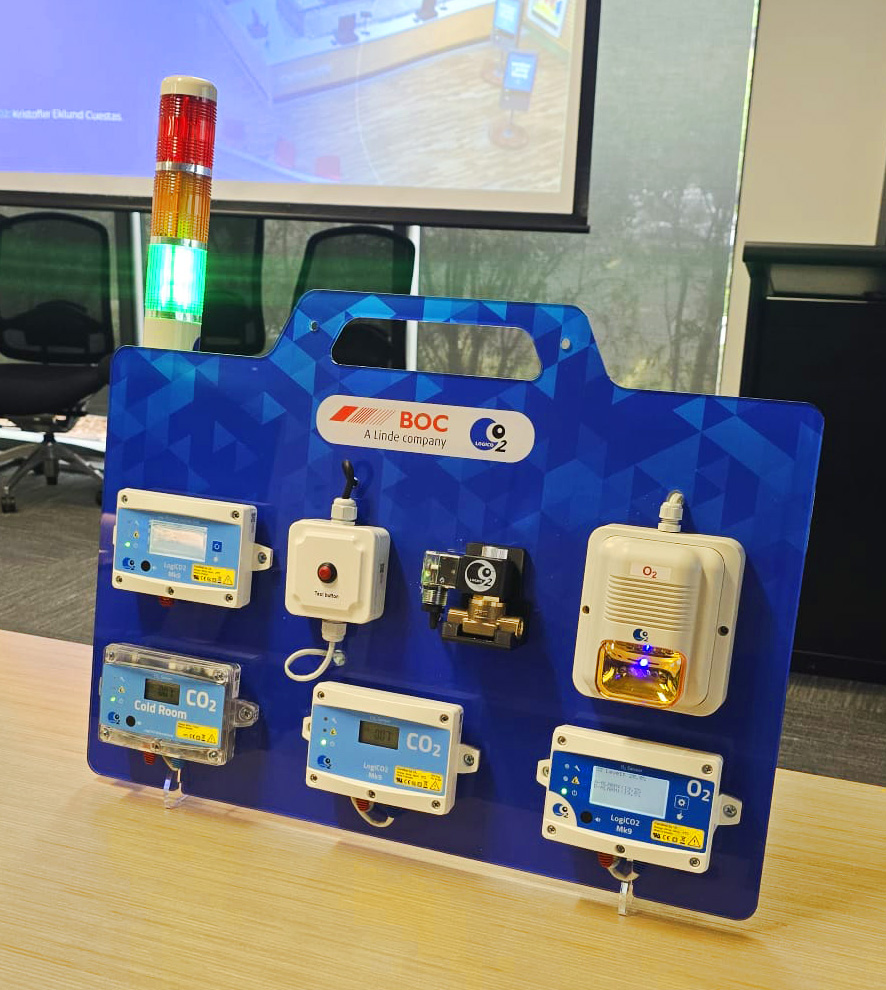
One of LogiCO2’s demonstration panels
Understanding why monitoring is not yet universal requires looking at the regulatory landscape and market awareness. In Australia, CO₂ and oxygen safety is primarily governed through workplace health and safety legislation at the state and territory level, supported by Safe Work Australia. These regulations address hazardous atmospheres, confined spaces, and exposure limits, but are often principles-based rather than prescriptive.
Awareness is generally strong in high-risk industries such as mining, manufacturing, and healthcare. However, in parts of the hospitality industry and small-scale food and beverage production, awareness can be more inconsistent.
“Smaller businesses may not always recognise CO₂ and oxygen as hazards until an incident or audit occurs,” said Murray. “This highlights the importance of education and proactive safety management beyond minimum regulatory requirements.”
Removing the barriers
From BOC’s experience, awareness has improved over time, particularly following high-profile incidents and increased regulator attention.
Market penetration of CO₂ monitoring in Australian hospitality is relatively strong. In brewing, especially craft and industrial brewing, uptake is continuing to improve. Winemaking is an area of opportunity, with larger producers generally well-equipped and smaller operators less so.
“The biggest barriers to wider adoption are awareness and understanding of the risks, rather than technology availability,” said Paul Ross, LogiCO2 product manager at BOC. “Cost can be a factor, particularly for small operators, but it is often secondary to a lack of information.”
BOC’s three commercial models are designed to address cost barriers directly, making the technology accessible regardless of business size or budget.
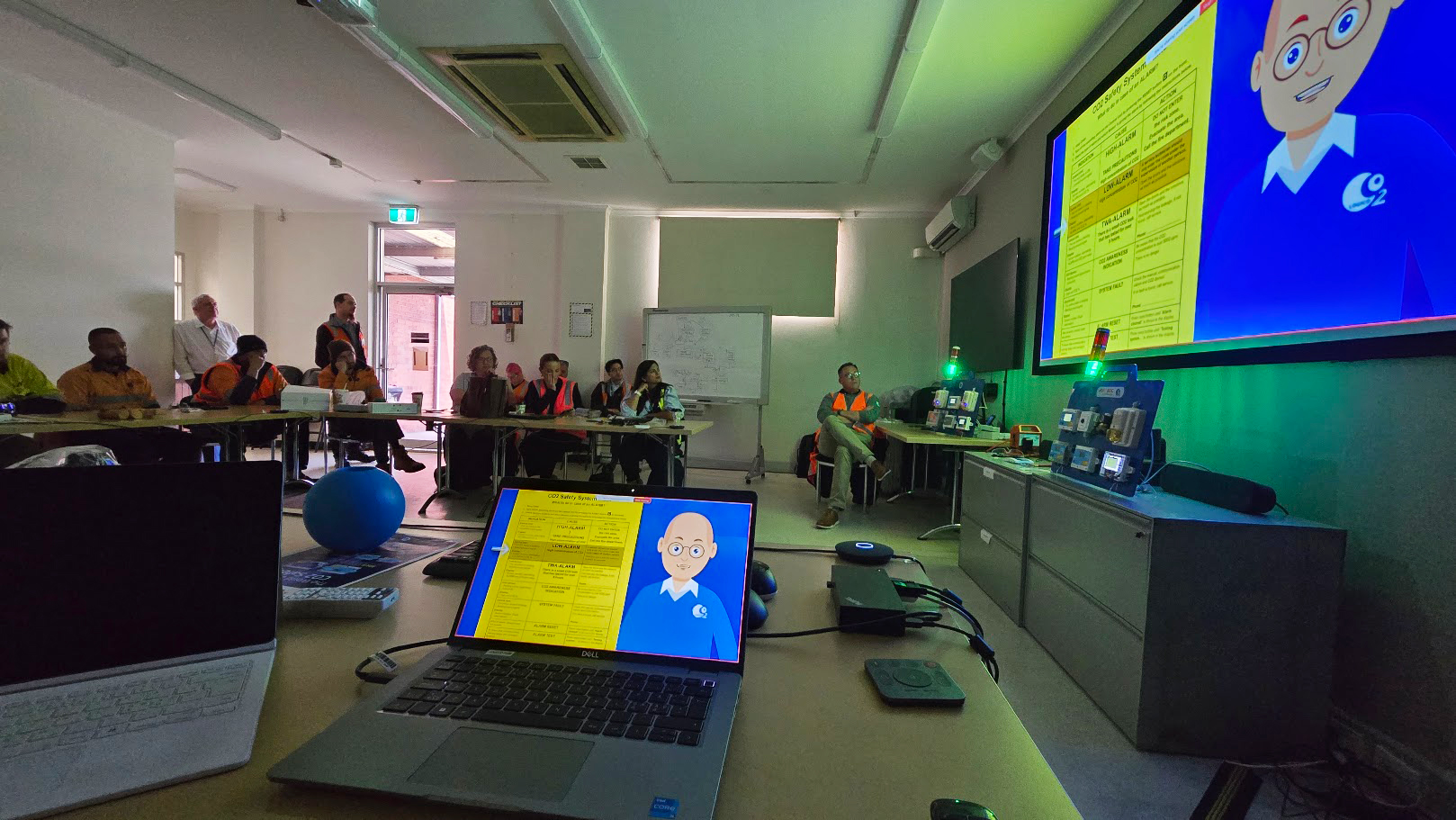
LogiCO2 safety training session featuring live demonstrations of the company’s CO2 safety systems
The first is a rental arrangement in which BOC covers the upfront installation and manages all ongoing servicing and maintenance for a monthly fee, providing customers with compliance support throughout the system’s lifecycle, with no (or very low) upfront capital cost. The second is an outright purchase, installed by BOC, with optional ongoing servicing by BOC. The third is a direct retail purchase, where the customer arranges their own installation.
Shaping what comes next
Australia has some of the strongest workplace health and safety regulations globally. BOC has been deliberate in partnering with LogiCO2 to meet these requirements. It is also active on regulatory committees to help shape and drive safety and compliance in Australia.
Over the next few years, BOC aims to see broader recognition of CO₂ and nitrogen hazards across all industries that use these gases. The goal is for monitoring, training, and risk assessments to become standard practice rather than optional extras. The company said it would like to see the market move towards proactive safety management, supported by clearer guidance and greater adoption of technology.
“If you use CO₂ or nitrogen in your business, safety should not be an afterthought. These gases are essential tools, but they can be dangerous without the right controls in place,” Johns said. “Understanding the risks and installing appropriate monitoring can save lives, protect your people, and safeguard your business. Prevention is always more effective, and far less costly, than responding to an incident.”
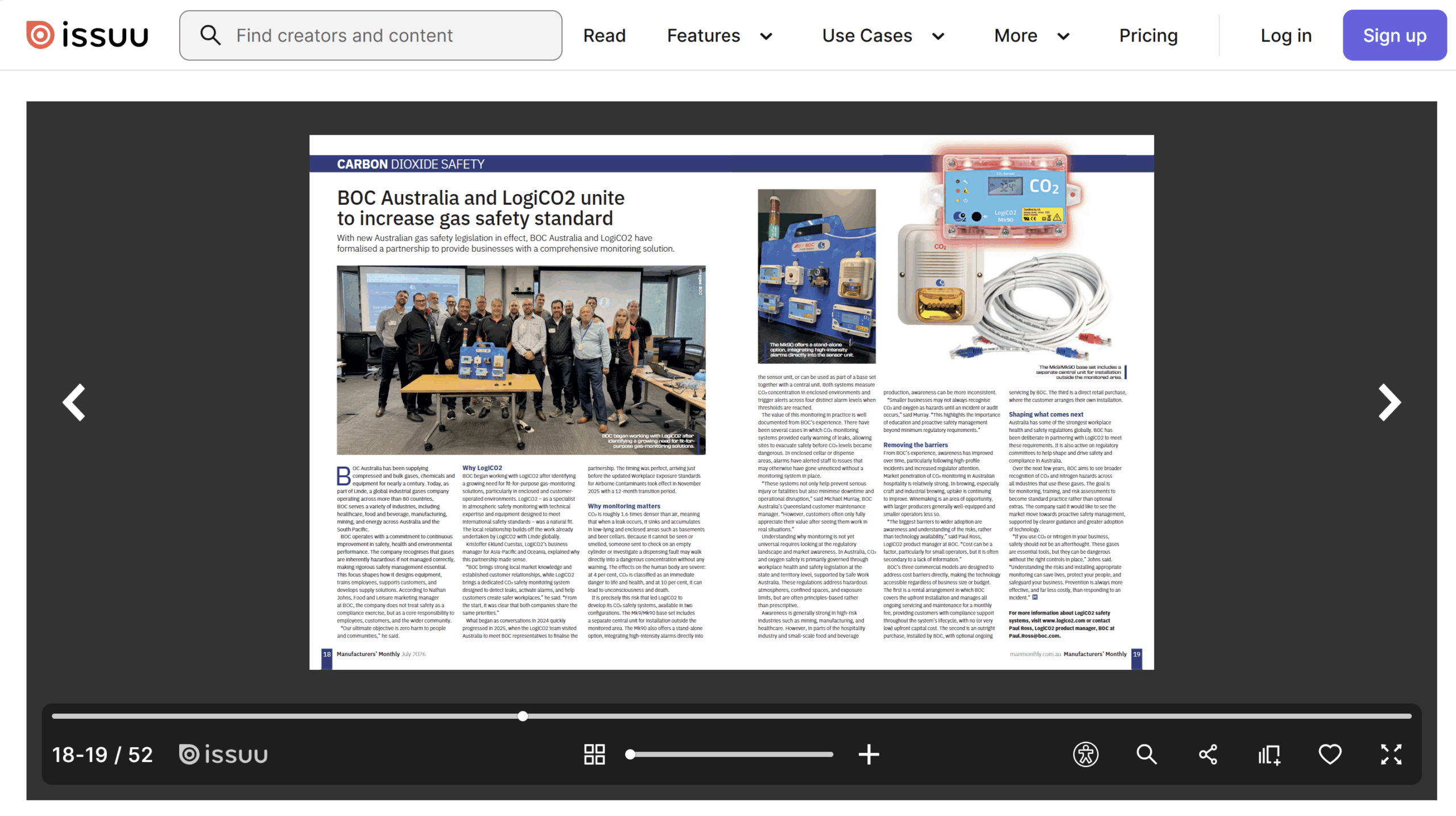 First published in Manufacturers Monthly, July 2026. Read the original article here [Click here]
Do have any questions or inquiries, feel free to contact us at info@logico2.com or +46 (0)31-695317. Alternatively, contact Paul Ross, Product Manager at BOC, at Paul.Ross@boc.com