
 Español
 Inglés
 Alemán
 Francés


New Zealand’s Urbanaut Brewery Puts CO2 Safety on Tap
Urbanaut Brewing Co. has installed a full CO2 monitoring system at its Auckland site, creating a real-world showcase of responsible CO2 safety for New Zealand’s brewing and hospitality industry. The installation is the first flagship project from a growing collaboration between New Zealand Beverage Systems (NZBS) and LogiCO2, a Swedish safety technology company specialising in CO2 monitoring solutions. As the official agent for Hoshizaki Lancer’s equipment supply business across New Zealand and the Pacific Islands, NZBS is well placed to bring LogiCO2’s technology to the region.
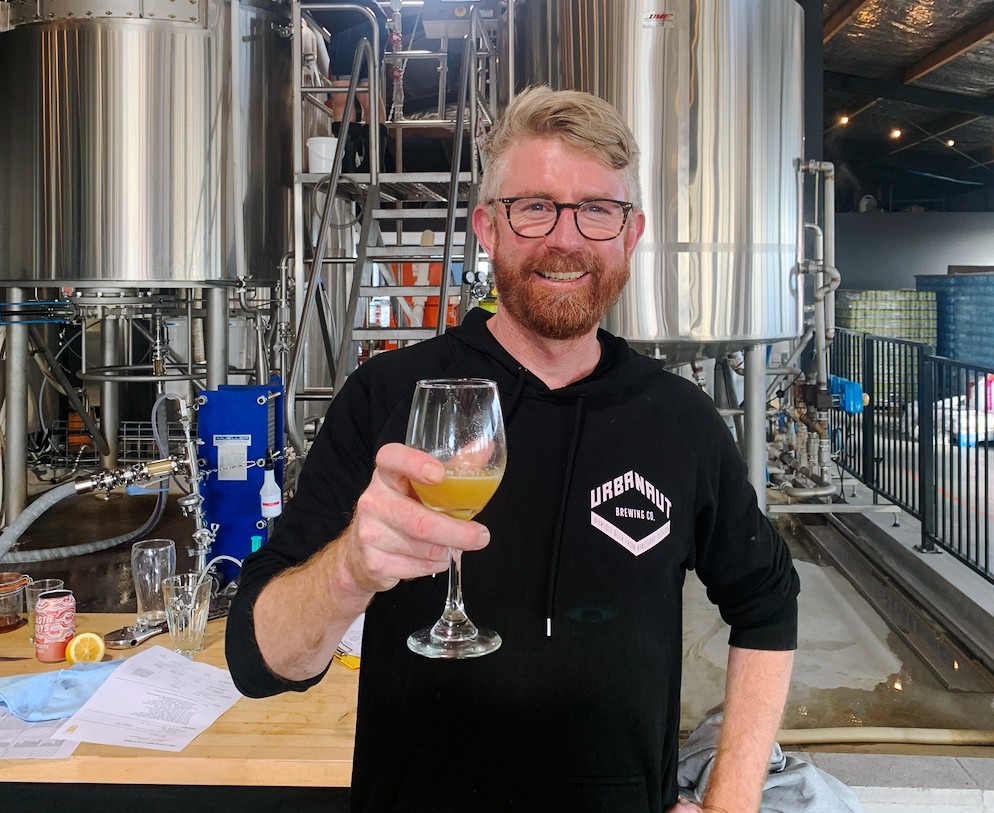
Bruce Turner, Co-Founder of Urbanaut Brewing Co. Bringing a world of brewing experience to the heart of Auckland’s craft scene
Not Your Typical Brewery
Urbanaut, located at 597 New North Road, Kingsland, has been part of Auckland’s craft beer scene since 2017. Founded by childhood friends Bruce Turner, Thomas Rowe, and Simon Watson, the brewery was built around a love of cities: the Urbanaut name itself is a portmanteau of ”urban” and ”astronaut,” and every beer in the range is named after a suburb from a city somewhere in the world.
Behind that creative identity is a brewery built with serious intent. Turner, who spent eight years brewing in the United Kingdom before returning to New Zealand, knew from experience that moving premises was costly and disruptive. So, from the outset, the team committed to a 1,200 m2 industrial building in Kingsland, a residential neighbourhood in central Auckland, and built the business around it.
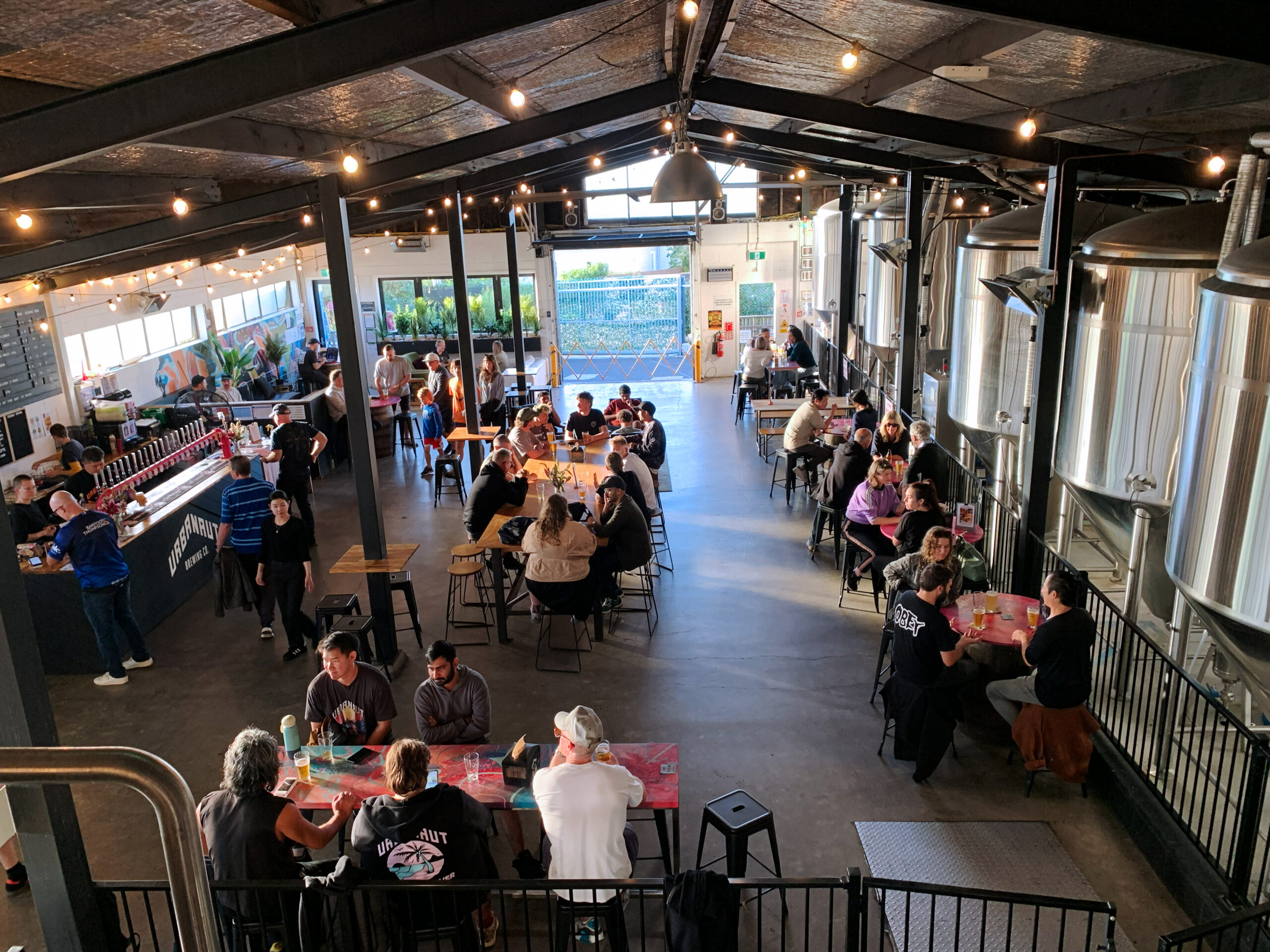
The result is a brewery that does not look or operate like a typical one. Rather than a high-ceilinged, open industrial space, Urbanaut spans two floors. Production, packaging, canning, and cool storage sit alongside a tap room, a burger kitchen, and offices – all within the same building. On any given day, the same space accommodates production staff, a canning line running at full capacity, and customers enjoying a beer at the bar in the afternoon. The brewery employs 30 people across all departments.
Last year, Urbanaut produced around 650,000 litres of beer, with 750,000 litres targeted for the current year. Around 70% goes into cans, sold through supermarkets, liquor stores, and online, with the remainder in kegs distributed to restaurants and bars around the country.
The Gas Behind the Beer
CO2 is fundamental to what Urbanaut does, and not just for carbonation. While most people associate the gas with the fizz in a finished beer, its role in the brewery is far more extensive. During fermentation, tanks naturally release CO2. Additionally, the gas is also used to push beer between tanks, to purge oxygen from the canning line before filling, and to carbonate finished product to the precise level required. With pipework running to multiple points throughout the brewery, the gas is in constant use.
Every Monday morning, a tanker arrives and connects to bulk storage tanks outside the building. The liquid CO2 passes through a vapour condenser, converting to gas before being piped into the brewery and distributed to the points where it is needed.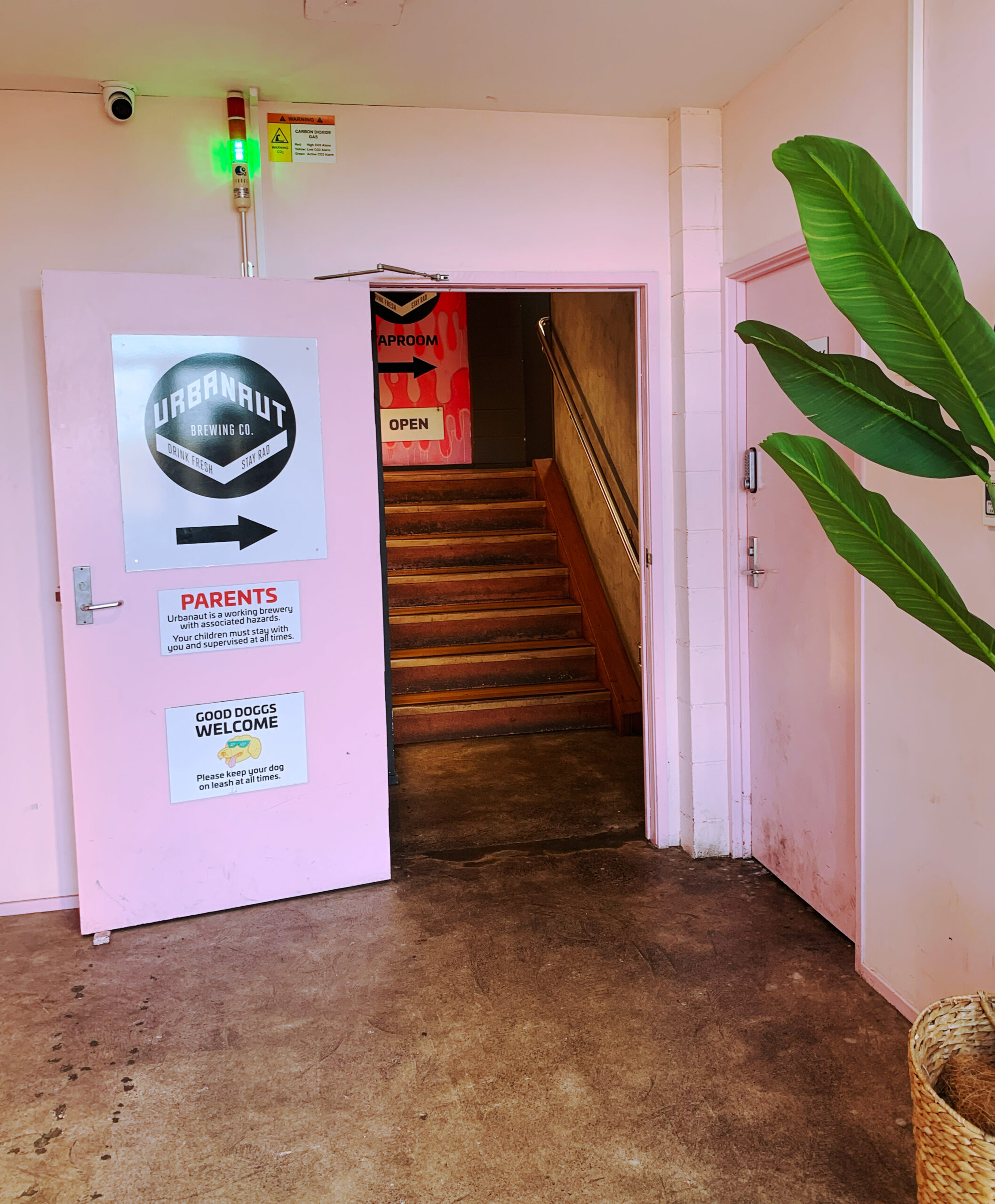
It is at the end of that process where the greatest risk arises. When a tank that has been filled with CO2 needs to be emptied and cleaned, the entire contents, up to 5,000 litres of pure CO2, must be released somewhere, making it one of the most hazardous moments in the brewing process.
CO2 is not the only gas that requires careful management. Urbanaut also operates a nitrogen generator, using nitrogen as an alternative to CO2 for some transfer processes. While nitrogen is less immediately hazardous, it presents its own risk: in high concentrations, it displaces oxygen, which can be just as dangerous. That is why oxygen levels in the nitrogen areas form part of the monitoring system too.
However, the technical risks are only part of the picture.
”We have the public coming into an industrial site,” says Turner. ”On weekends, the tap room is open and there are no production staff around, but fermentation is still happening and CO2 is still present in the pipelines and tanks. If anything were to go wrong, the people there wouldn’t necessarily have the training to recognise the risk.”
For a brewery that is also a public venue, that risk could not be left unmanaged.
A Known Risk, Finally Addressed
Turner’s awareness of CO2 safety dates back to his brewing career in the UK, where monitoring systems were common in enclosed spaces and cellars, as required by regulation. He always intended to install something similar at Urbanaut, but with the demands of building a business from scratch, it kept getting pushed aside.
What changed was a visit from Frans Bos of NZBS and the LogiCO2 team in January 2026. Turner had known Bos for some time through the industry, and when NZBS began looking for a New Zealand brewery to serve as a flagship case study for LogiCO2, Urbanaut came to mind. The brewery’s mixed-use layout made it an ideal showcase.
Turner was introduced to LogiCO2’s Kristoffer Eklund Cuestas, Business Manager for Central and South America, Spain, Asia-Pacific, and Oceania, and Ross Olsen, Business Manager for the US and Canada, and together they identified the key risk points and mapped out where monitoring would matter most.
”Walking through the brewery, it was immediately clear how much passion the team has for their craft,” says Eklund Cuestas. ”We asked Bruce to show us the areas he was most concerned about, and the safety plan came together very naturally from there, because it was built around the real day-to-day operation of the brewery and what the team actually needed.”
Within half an hour, the conversation had turned to plans for a full installation. Looking back, Turner says the decision was straightforward. ”It’s like getting in a car and not putting a seat belt on,” he says. ”It’s the kind of thing that will ensure your safety. Why would you not do it?”
A Straightforward Installation
The installation process was faster and less disruptive than Turner had expected. During the site visit, the LogiCO2 team assessed every area of the building that presented a risk and mapped out sensor locations, control panel placement, and alarm points.
Components arrived approximately a week later, and the installation was completed over three to four weeks, with work carried out while production was at full capacity. January is one of Urbanaut’s busiest months, but there was no disruption to operations. ”They just worked around us and installed it like it was no issue,” Turner says. ”It’s really, really easy.”
The system was designed to fit the brewery’s unique two-floor layout, with every element positioned around how the building actually operates.
”It was a really enjoyable project, designing a CO2 and O2 safety system that protects both staff and guests while fitting naturally into the daily rhythm of the brewery,” says Eklund Cuestas.
On the lower floor, the safety system protects the storage areas, office, staff area, canning area, and two cool rooms, with a sniffer unit and additional oxygen sensors positioned around the cool rooms for added protection in these enclosed spaces.
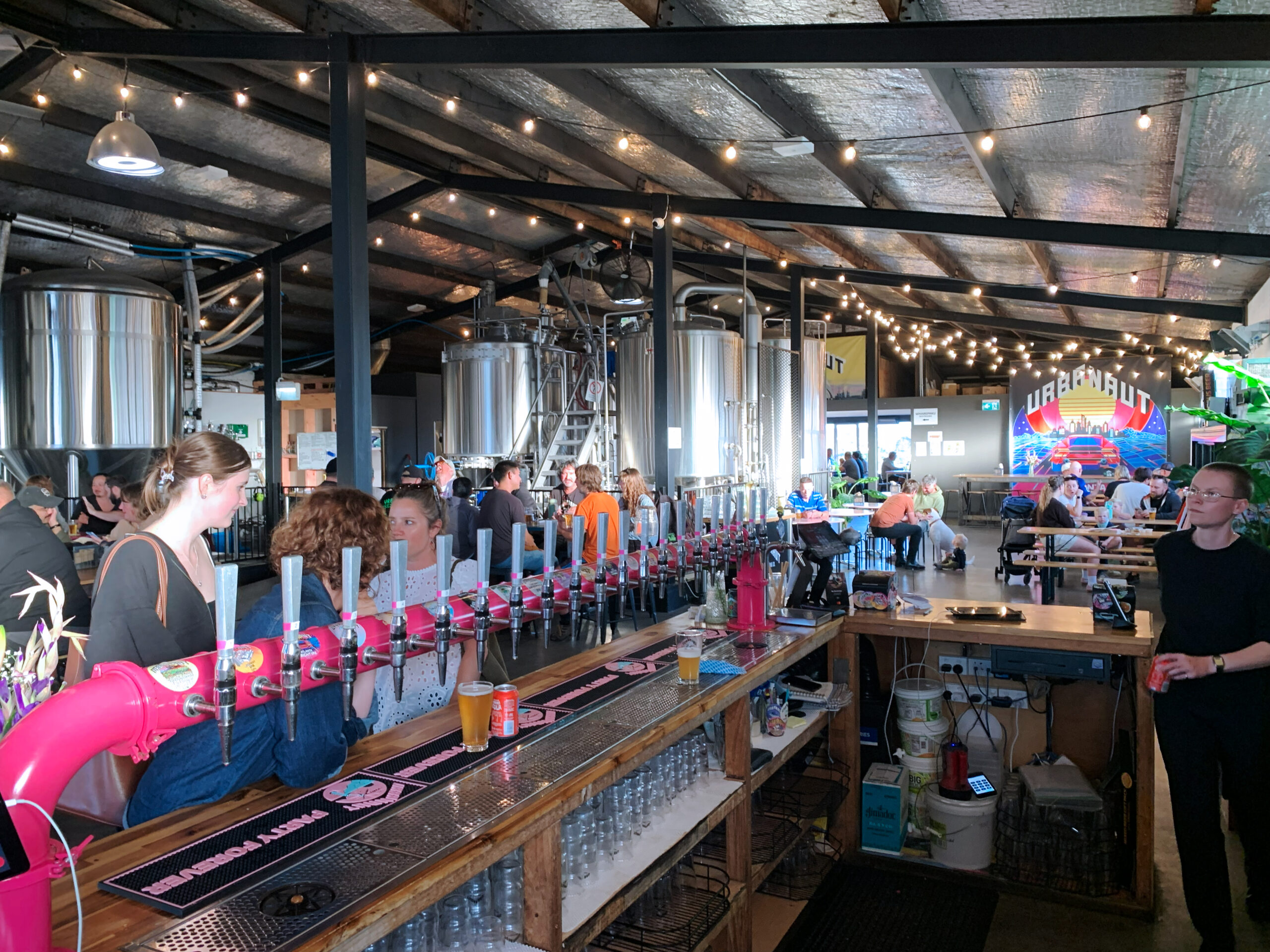
On the upper floor (which houses the bar, retail area, seating, office, kitchen, brew house, and fermentation tank area), the central unit, power monitor, and second sniffer unit are positioned near the bar and retail side.
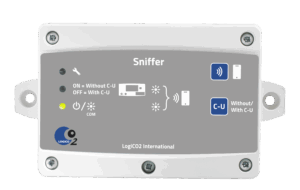
The sniffer units connect to the LogiCO2-Sniffer App via Bluetooth, allowing staff and service personnel to wirelessly access the system from a mobile phone. Through the app, they can view readings, identify sensors, check alarm and fault status, and support commissioning, servicing, and data follow-up – all remotely.
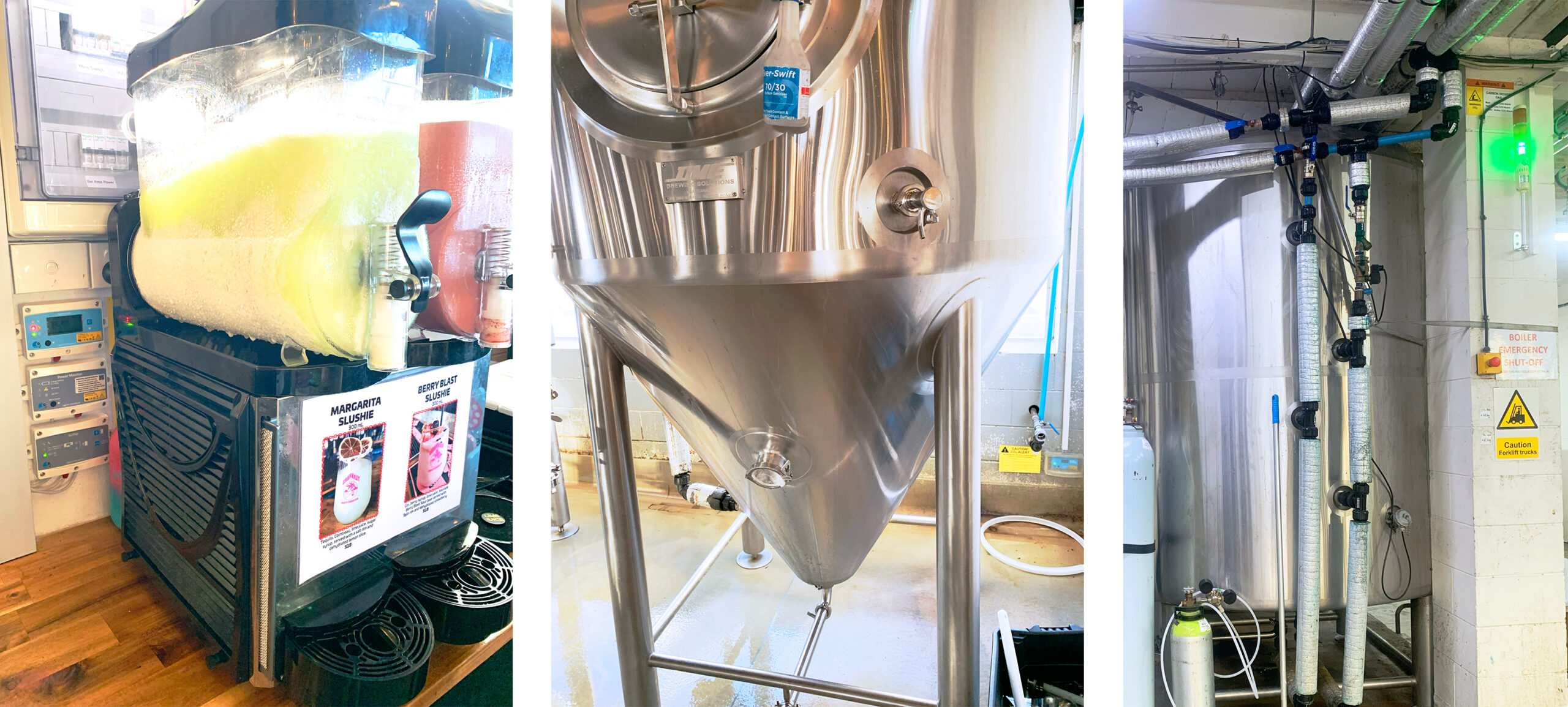
This placement was deliberate: during busy service hours, and especially late at night when the bar is still open, staff sometimes need to go downstairs to change beer taps or access operational areas. By placing the central unit near the bar, the manager or bartender has a natural overview of the system status and can check for alerts before anyone enters a potential risk area. The panel is fitted with a reset button and a phone connection point.
”For me, that is what good safety design is about,” says Eklund Cuestas. ”Safety information should always be placed outside the danger zone and close to the people it is meant to protect, with a clear safety plan in mind in case of an alarm, so everyone knows how to act. The visual traffic lights give staff an added sense of confidence, while the horn and strobes at the doors help prevent anyone from entering an unsafe area.”
The full installation comprises six CO2 sensors, two oxygen sensors, three traffic lights, ten horn and strobe units, two sniffers, one power monitor, and one SMB shut-off valve connected to the external bulk CO2 storage tank. Running on CAT5 cabling, the system provides strong CO2 coverage across the brew house, canning, production, and access areas, with horn and strobe units and traffic lights mounted at key points throughout the site. When thresholds are reached, audible and visual alerts activate at escalating levels, with each alarm level calling for a specific response. If the system reaches a high alarm level, the SMB shut-off valve will close automatically, cutting off the gas supply to the building without requiring anyone to act. ”That just makes everything safer,” says Turner.
The system was already proving its value during commissioning. When fermentation activity caused CO2 levels to rise one Saturday evening, the tap room manager called Turner to report an unfamiliar beeping. Turner identified the cause remotely, advised the manager to open windows in the affected area as a precaution, and the alarm cleared within minutes. ”It was a really good example of the protection and process,” he says, ”and making someone aware that CO2 levels can creep up.”
There are practical benefits beyond safety too. CO2 is an operational cost, and Turner notes that the monitoring data will help the team identify leaks and inefficiencies they would otherwise have no way of detecting.
A Message for the Wider Industry
The installation has changed how Turner thinks about CO2 safety, and he wants the wider industry to take note. CO2 safety has now become a standing agenda item at the brewery’s bi-monthly health and safety meetings, a shift Turner sees as significant. ”It’s easy to look at a forklift and understand the risk,” he says. ”With CO2, because you can’t see it, it’s easy to assume you’ll be okay. This has given us a real wake-up that it’s a genuine danger, and people die from it every year.”
Turner is candid about the state of CO2 safety awareness in New Zealand’s brewing community. In nearly nine years of operating Urbanaut, he cannot recall a single conversation with another brewer about CO2 monitoring, despite the industry being otherwise open and collaborative. He attributes this partly to the way many craft breweries grow: starting small, scaling up, and picking up safety practices along the way without always formalising them. Many also operate in buildings never designed for brewing, with low ceilings and enclosed spaces where CO2 can linger undetected.
”I think we’re naive if we think CO2 is something we can manage without monitoring,” says Turner. ”It’s a known silent killer, and we’re all just hoping we’re not the first one on the front page of the newspaper when something goes wrong.”
He believes formal legislation is both necessary and overdue.
For now, Turner is focused on leading by example. ”I’d love to show it off,” he says of the installation. Urbanaut’s central location and varied layout make it an ideal place for other brewers to see a complete system in action, and he is looking forward to welcoming anyone who wants to see it first-hand.
In June, Urbanaut will host an industry event for New Zealand’s craft brewing community, with a live stream available for those unable to attend in person. It is an opportunity Turner hopes will spark the conversations that have been missing from the industry for too long.
To read more about NZBS’s work with LogiCO2 to improve CO2 safety in New Zealand, [Click here]
Project Quick Facts
- Project: Urbanaut Brewery and Taproom, 597 New North Road, Kingsland, Auckland, New Zealand.
- Installation date: 12 Jan 2026.
- Facility size: 1,200 m2.
- Staff: 30 employees.
- Production: 650,000 (2025), targeting 750,000 litres in 2026.
- Split: 70% cans, 30% kegs.
- Upper floor: bar, retail, seating, office, kitchen, brew house, and fermentation tank area with the central unit, power monitor, and sniffers positioned near the bar (connected to LogiCO2- Sniffer app via Bluetooth).
- Lower floor: storage, office, staff area, canning area, and two cool rooms.
- System components: x6 CO2 sensors, 2x O2 sensors, 3x traffic light alarms, 10x horn/ strobes, 2x sniffers, 1x power monitor, and 1x SMB shutoff valve.
- Coverage: full CO2 coverage across brewing, canning, production, and access areas. O2 sensors by the cool rooms. Horn/ strobes and traffic lights at key points throughout, all connected to one central unit.
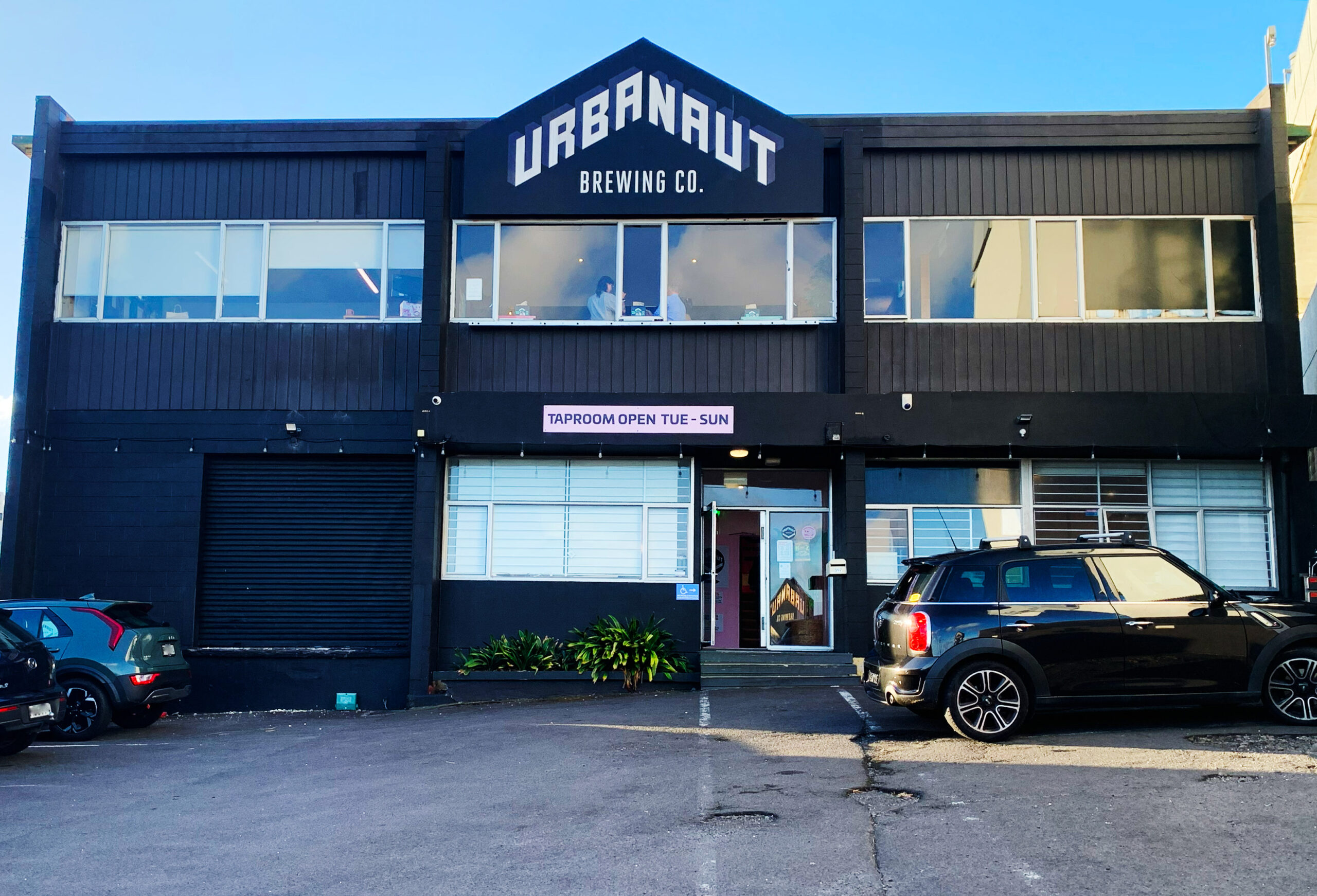
The exterior of Urbanaut Brewing Co. in Auckland, showcasing a site equipped with a comprehensive CO2 monitoring system to promote safety in brewing and hospitality
Video: New Zealand’s Urbanaut Brewery Puts CO2 Safety on Tap
Go behind the scenes at Urbanaut Brewing Co. in Auckland and see how the LogiCO2 CO2 safety system helps protect both the brewery team and visitors:
Click to download this article
Click to view the Urbanaut Brewery installation layout
Click to read the full article in Pursuit of Hoppiness
Do have any questions or inquiries, feel free to contact us at info@logico2.com or +46 (0)31-695317