
 Deutsch
 Englisch
 Spanisch
 Französisch


LogiCO2 Safety System Enables Safe Fermentation at Historic Spanish Winery
Following serious fermentation accidents at various wineries, LogiCO2 partnered with Alcoholera de la Puebla in Toledo, Spain, to demonstrate effective CO2 risk management. The installation, documented in a case study film, transformed deadly fermentation risks into manageable hazards, enabling four generations of wine-making tradition to continue with comprehensive worker protection.
Nature of the Threat
In Risk is inherent to all winemaking operations: for every litre of grape juice processed, fermentation generates approximately 60 litres of carbon dioxide (CO2) as a natural byproduct of converting sugars to alcohol. Yet this colourless, odourless gas cannot be detected through normal human senses. Unlike other toxic gases that announce their presence with strong smells or visible appearance, CO2 operates invisibly. When symptoms of exposure begin, dangerous concentrations are already present, making specialised monitoring systems essential for workplace safety.
In enclosed spaces, this heavier-than-air gas settles into low-lying areas, displacing oxygen and creating invisible pockets of danger. Workers may descend into a cellar or enter a fermentation room feeling perfectly normal, only to collapse within moments.
The human body’s response to elevated CO2 follows a predictable but increasingly dangerous progression. At a 1% concentration, shortness of breath may occur. At 3%, breath and pulse rates increase noticeably. By 7%, dizziness, vomiting, and severe headaches occur with reduced blood supply to the brain. At 10%, exposure causes convulsion, unconsciousness, and death, whilst 20% concentration results in death within seconds.
These risks are especially pronounced at wineries during harvest season.
Harvest Season Challenge
Alcoholera de la Puebla, a winery and distillery in Toledo’s La Mancha region, was established in 1984 and is now operated by the fourth generation of the Huertas family. During harvest season, the facility faces its greatest CO2 challenge: the 10- to 12-day fermentation process generates concentrations 20 to 30 times higher than normal atmospheric levels.
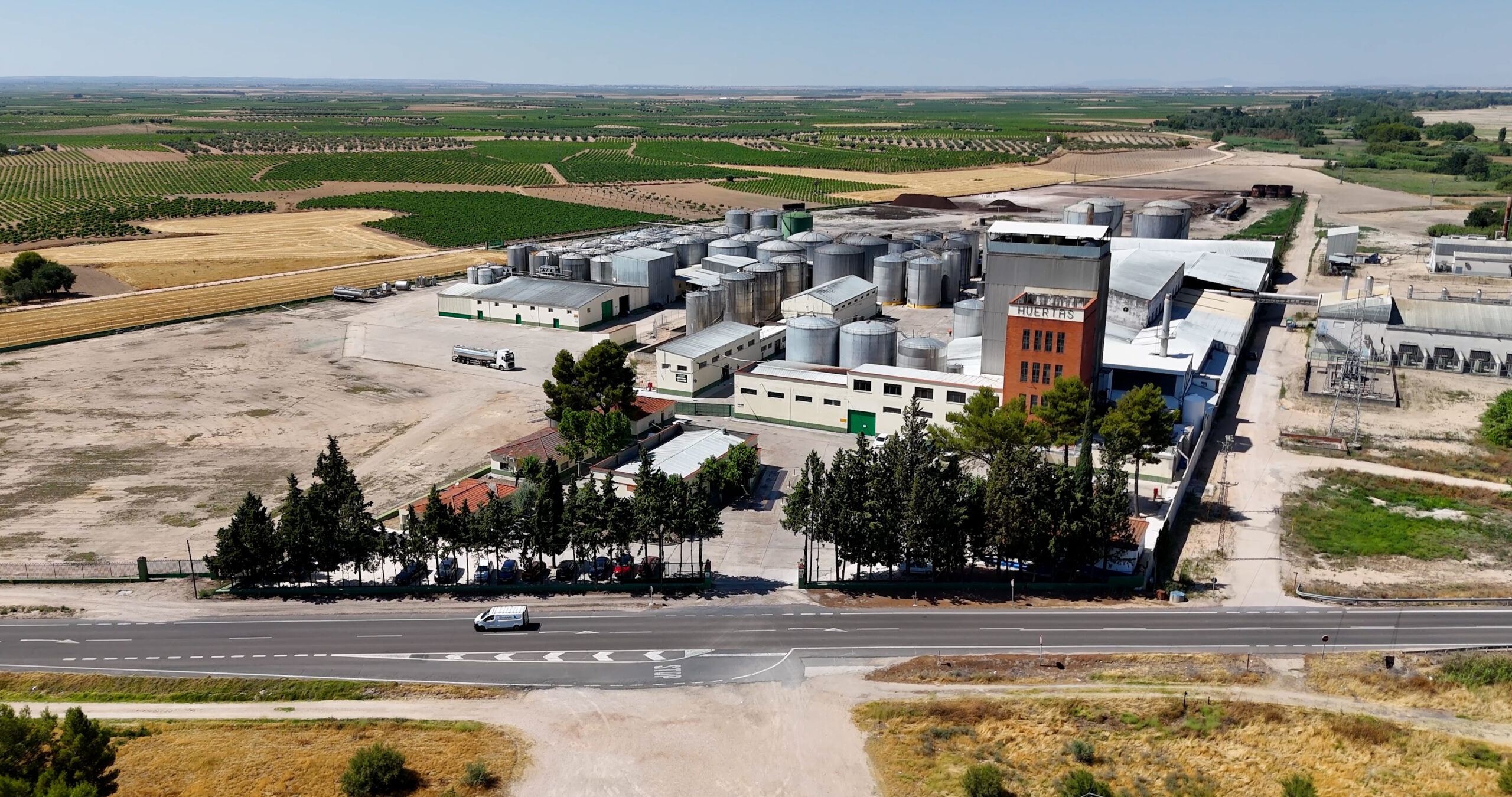
Alcoholera de la Puebla
”During fermentation season, the winery becomes a high-risk environment. Extreme caution is essential. In a matter of seconds, oxygen deprivation can lead to sudden death,” explains Pascual Villalba, enologist at Alcoholera de la Puebla.
The challenge extends beyond active fermentation. After fermentation concludes, workers must enter vats for cleaning and maintenance, confined space work that poses equally serious risks.
The Solution: LogiCO2’s Safety System
To manage these risks, Alcoholera de la Puebla partnered with LogiCO2, a Swedish company that specialises in CO2 detection technology to detect, alert, and prevent hazardous CO2 exposure.
As a world leader in CO2 safety systems, LogiCO2 has installations in 126 countries, serving diverse industries, including hospitality venues, wineries, breweries, greenhouses, soft drink plants, ships, and supermarkets.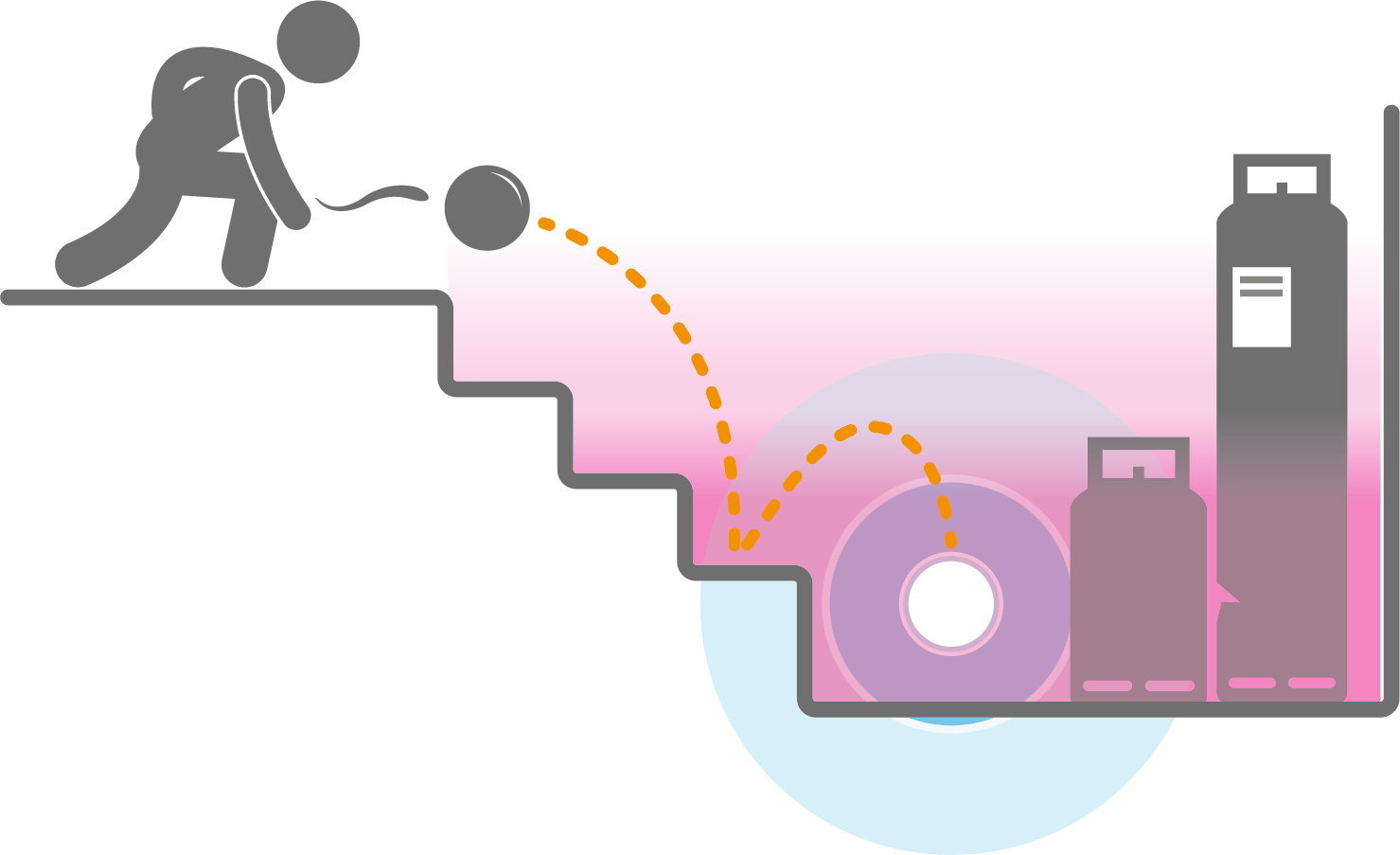
“With the LogiCO2 products, we help companies create a reliable plan to detect CO2 and prevent personnel or visitors from entering confined spaces with hazardous conditions,” explains Kristoffer Eklund Cuestas, business manager at LogiCO2.
The company’s commitment extends beyond product deployment; it continually develops new CO2 and O2 safety solutions whilst providing training and certification to partners worldwide, ensuring consistent installation standards and customer support in every country.
The Complete Safety System
Together with LogiCO2, Alcoholera de la Puebla implemented a comprehensive dual approach that combines fixed facility monitoring with portable detection for confined spaces.
The facility installed one central unit, two strategically positioned fixed Mk9 LogiCO2 sensors, and two large extraction fans. An external display shows real-time CO2 levels and temperature readings from both sensors, whilst Bluetooth connectivity enables the team to continuously monitor readings via a mobile app.
”When those sensors identify an excess of CO2, both visual and audible alarms are activated. The extraction fans then immediately remove the excess CO2 from the space,” explains José Ramón Huertas, production manager at Alcoholera de la Puebla.
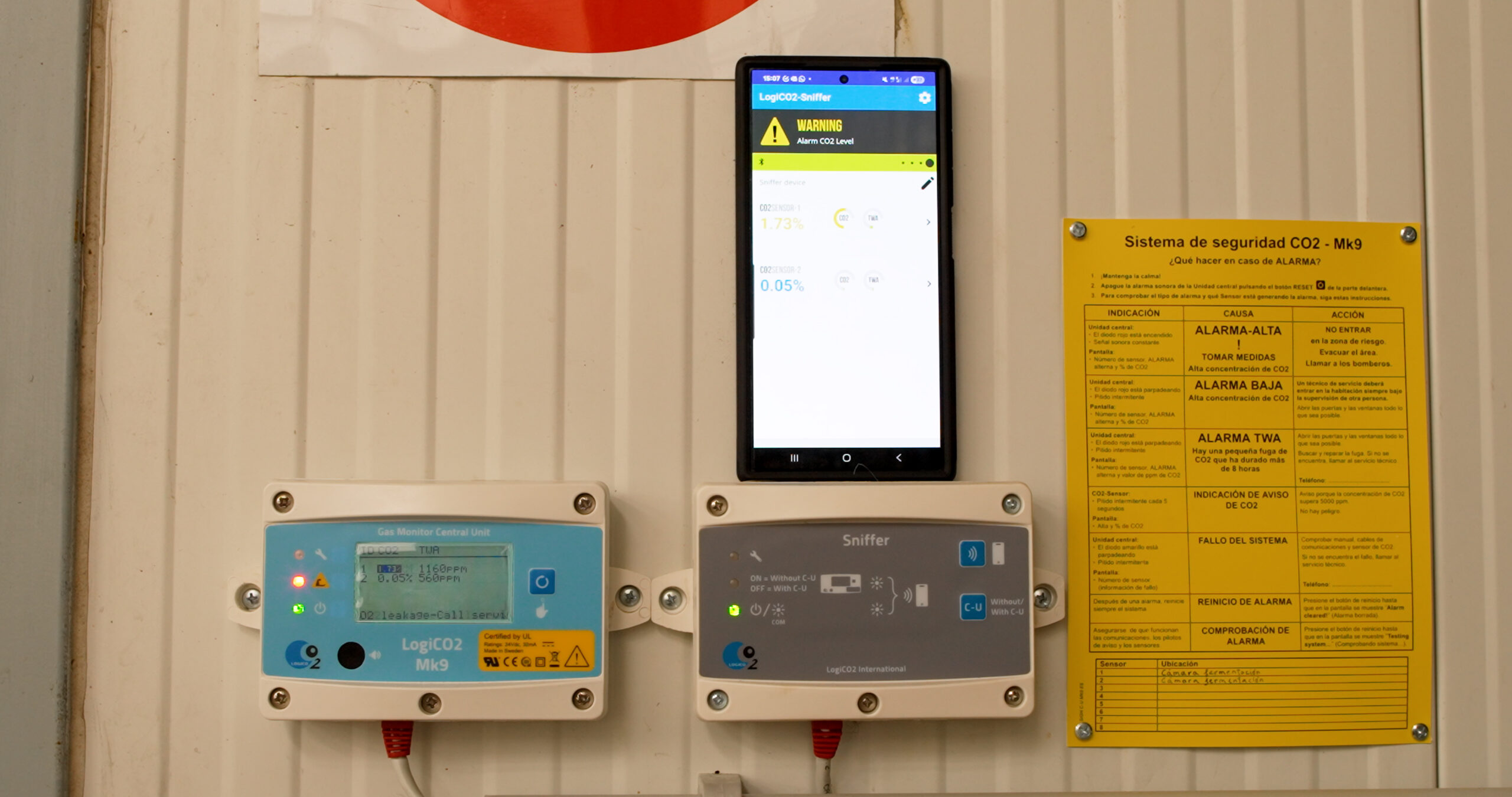
The system’s internal measurement log stores 14 days of data for regulatory compliance. If the central unit becomes immobilised, sensors automatically enter standalone mode, maintaining safety coverage.
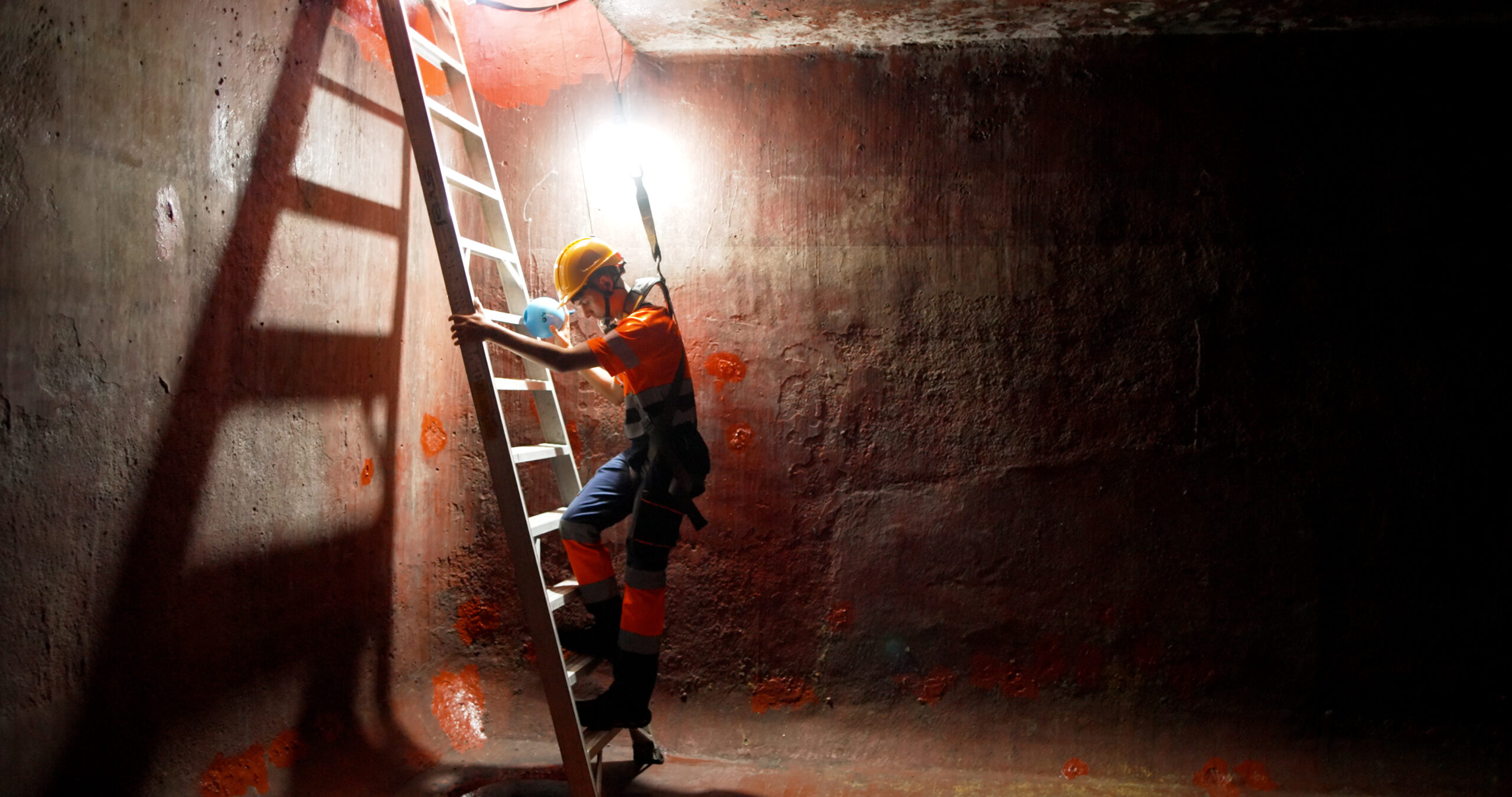
For the high-risk work of entering fermentation vats, the facility also deploys portable LogiCO2 sensors as part of a detailed safety protocol.
Before any entry, the Alcoholera team first ventilates the vats naturally, then applies forced-air ventilation. Next, they lower portable CO2 monitors inside to test the air. Since CO2 settles at the bottom, if the sensor alarm remains silent, the operator can enter safely. Additionally, workers use ”guardian angel” tripod systems, harnesses, and full personal protective equipment (PPE) to ensure maximum safety.
”It’s a smart and dependable solution,” says Ramón Huertas. ”It allows our teams to work safely, giving everyone greater peace of mind.”
This layered approach creates complete coverage: fixed sensors monitor facility-wide conditions and trigger automatic extraction, whilst portable sensors protect employees in the highest-risk scenarios.
What Makes LogiCO2’s System Unique
The LogiCO2 safety system has a mean time between failures (MTBF) of 15 years and is backed by a five-year warranty. It complies with all relevant regulations and standards in Europe, the United States, and worldwide.
What distinguishes the system is its combination of flexibility and intelligence. The modular design allows facilities to start with a single central unit (supporting up to 12 sensors) and expand as they grow. The plug-and-play architecture enables immediate implementation without complex installation.
The system’s automation eliminates the need for constant human monitoring. When CO2 levels exceed pre-programmed thresholds, extraction fans activate whilst alarms alert personnel. The system monitors up to four alarm levels, ensuring compliance with local and national safety codes, including TWA (Time-Weighted Average) limits and STEL (Short-Term Exposure Limit) requirements.
Perhaps most significantly, the system requires virtually no maintenance. Self-calibrating technology means there is never a need to change calibration under normal operating conditions throughout the sensor’s lifetime, substantially reducing maintenance costs.
For facilities using nitrogen, an optional O2 sensor is available to provide complete gas monitoring.
Proven Effectiveness
LogiCO2’s safety system at Alcoholera de la Puebla has been working well since installation, and the team is happy with the end result.
“We’re very satisfied. Everything has been installed perfectly. And now we have the assurance that our workers are fully protected,” says Ana Belén Ramos, office manager at Alcoholera de la Puebla.
This case study provides the wine industry with evidence that fermentation accidents are preventable through systematic CO2 detection. The installation demonstrates effective integration of fixed monitoring and portable detection, a comprehensive approach that other wineries can adapt to their specific operational requirements and risk profiles.
”Greater safety would be impossible,” concludes Ramón Huertas.
Video: LogiCO2’s Solution in Action
See how Alcoholera de la Puebla transformed fermentation safety with advanced CO2 detection technology:
Do have any questions or inquiries, feel free to contact us at info@logico2.com or +46 (0)31-695317