
 Deutsch
 Englisch
 Spanisch
 Französisch


LogiCO2 and Install Beer Make Gas Safety Part of the Design in Spain
LogiCO2 and Barcelona-based Install Beer, an official LogiCO2 distributor and technical partner, are bringing CO2 and O2 safety monitoring to workplaces across Spain and Europe, where the obligation to control gas risks is clear but detection remains unevenly applied. Combining LogiCO2’s safety ecosystem with Install Beer’s three decades of field experience, they aim to make gas-risk assessment and appropriate detection a standard part of installation design.
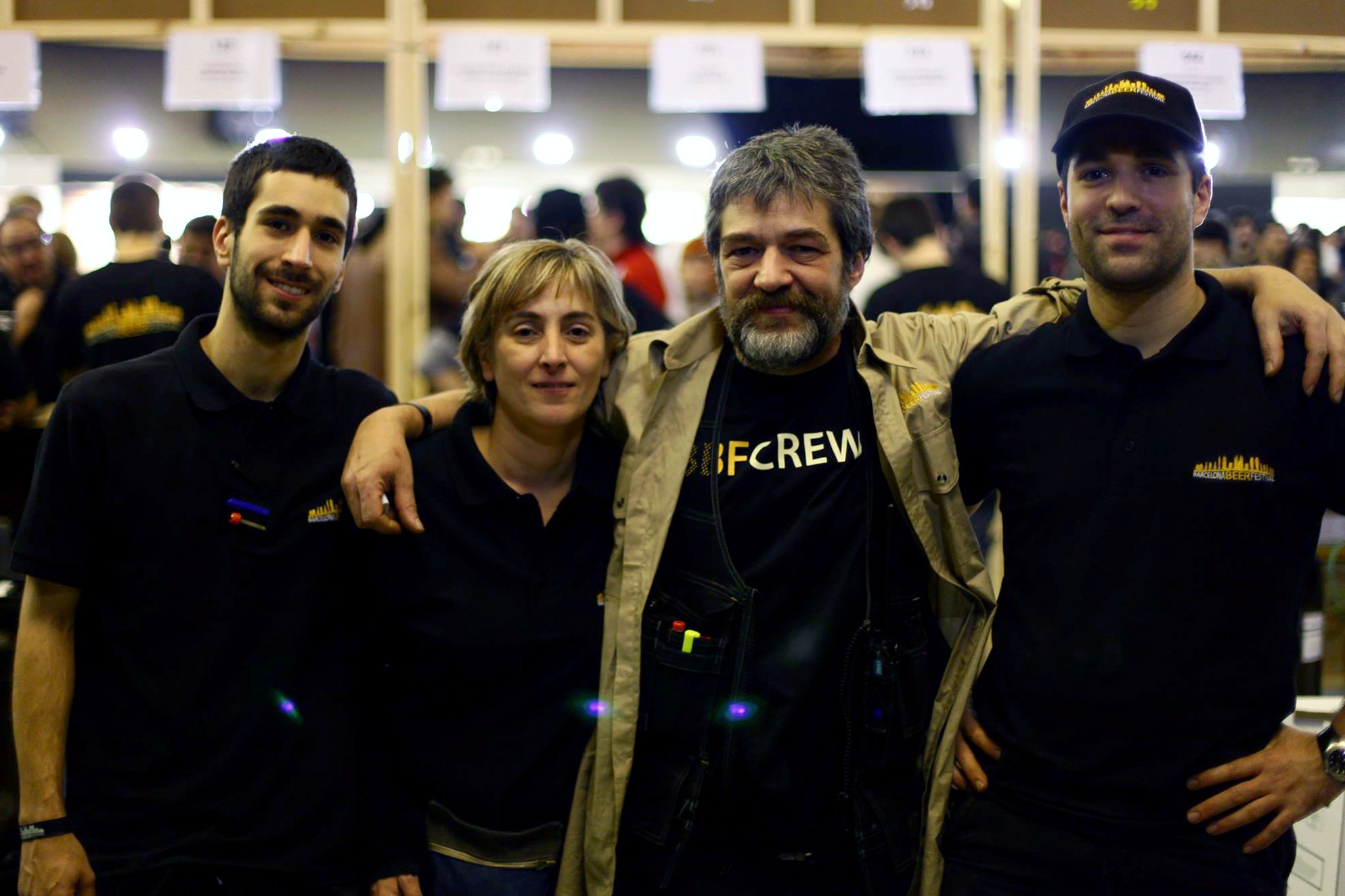
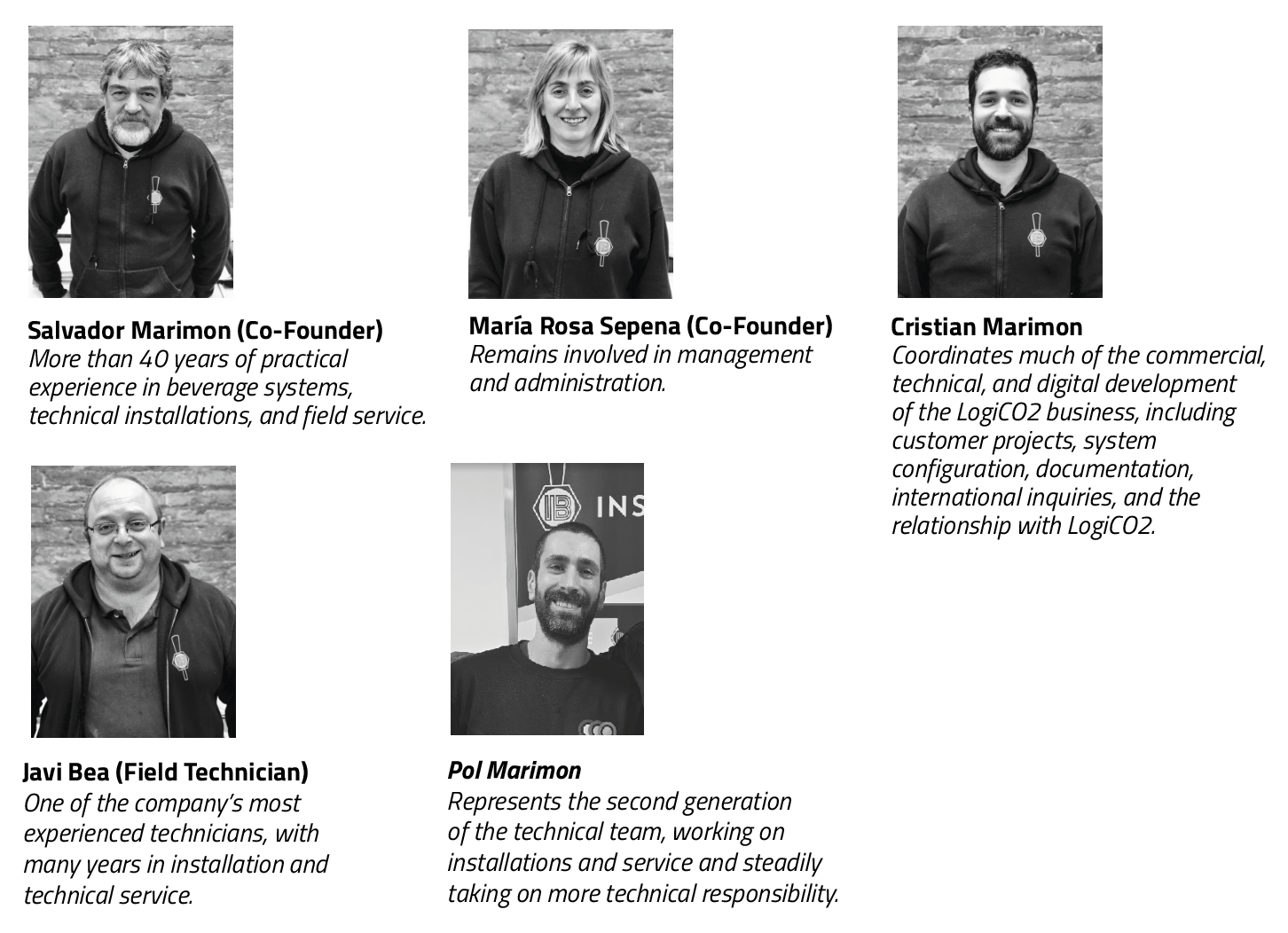
The Install Beer team, bringing together decades of experience in beverage systems, technical installations and service
Thirty Years in the Field
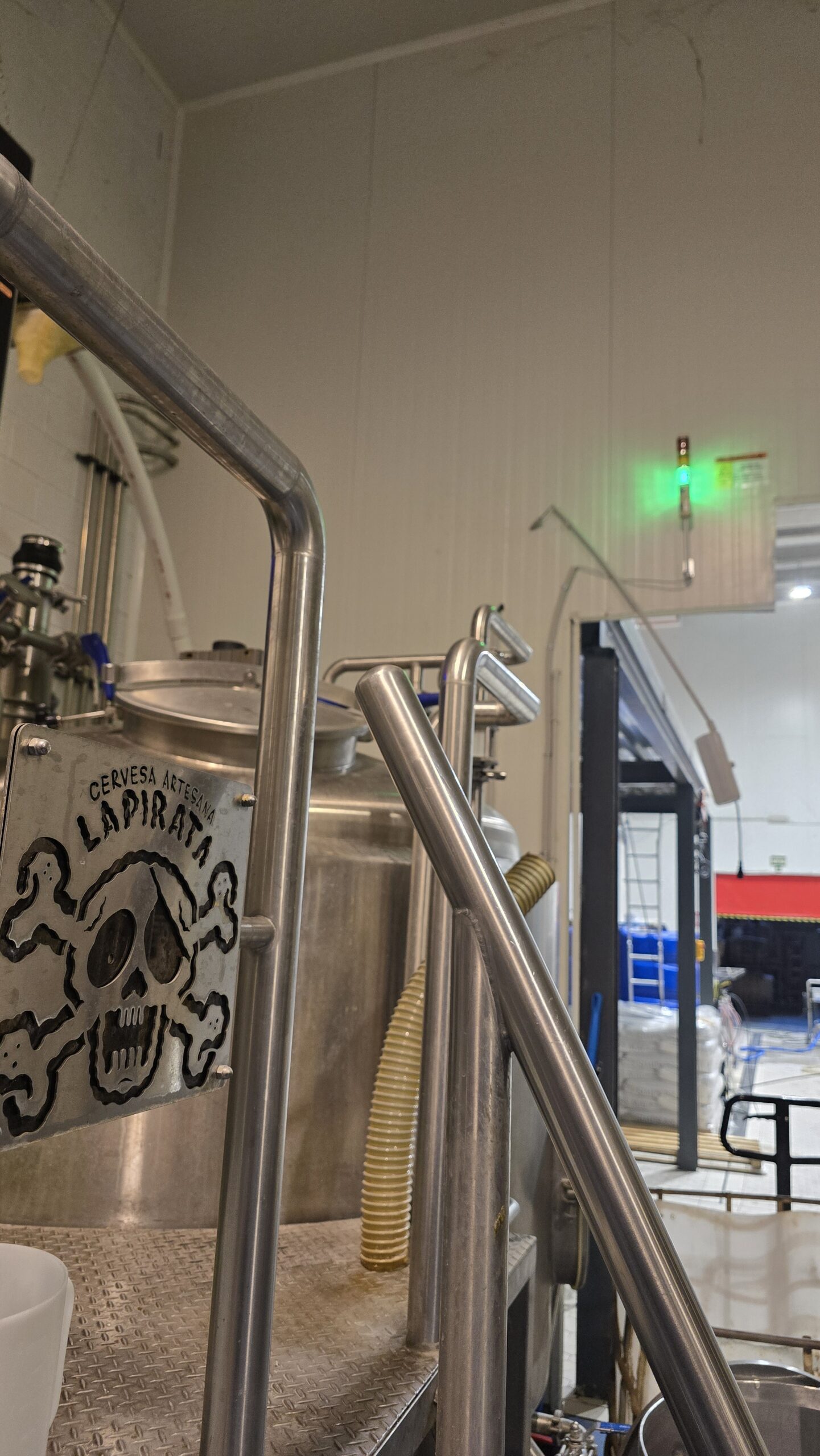
LogiCO2 Traffic Light
Install Beer began operating in 1996, making 2026 its thirtieth year in the industry. Founders Salvador Marimon and Mª Rosa Sepena built the company’s reputation through field work, technical installations, and service for breweries, beverage companies, and the hospitality sector.
Its scope has since widened considerably. Install Beer now designs, supplies, installs, and maintains professional dispensing systems for beer, water, wine, cider, vermouth, cocktails, kombucha, nitro coffee, and many other on-tap beverages.
The family’s second generation is now active in the business. Digital development has turned Install Beer from a mainly local and national service company into one that supplies customers throughout Spain and, increasingly, across Europe. Its customers range from hospitality businesses and breweries to laboratories, pharmaceutical companies, and industrial facilities.
When the Working Gas Becomes the Hazard
Gas has always been part of Install Beer’s daily work, since its beverage installations rely on CO2, nitrogen, and mixed gases. For years, the company’s main responsibility was ensuring those installations worked correctly. Over time, field experience also showed the team how dangerous those gases can be.
“The same gas that makes a dispensing system work can become a serious occupational hazard when something goes wrong,” explains Cristian Marimon, who coordinates Install Beer’s LogiCO2 business. “CO2 is colorless and odorless, so people cannot rely on their senses to detect a dangerous leak. Nitrogen and other inert gases can lower oxygen levels without giving any obvious warning to the people entering the area.”
As the company’s work expanded beyond beverage dispensing into wineries, laboratories, and industrial production, gas safety became increasingly important. Install Beer now treats safety as part of the complete installation.
“It isn’t enough for a system to work correctly under normal conditions,” says Marimon. “We also have to ask what happens if there’s a leak, where the gas will accumulate, whether people will be warned before entering the area, and how the installation should react in an emergency.”
How the Partnership Began
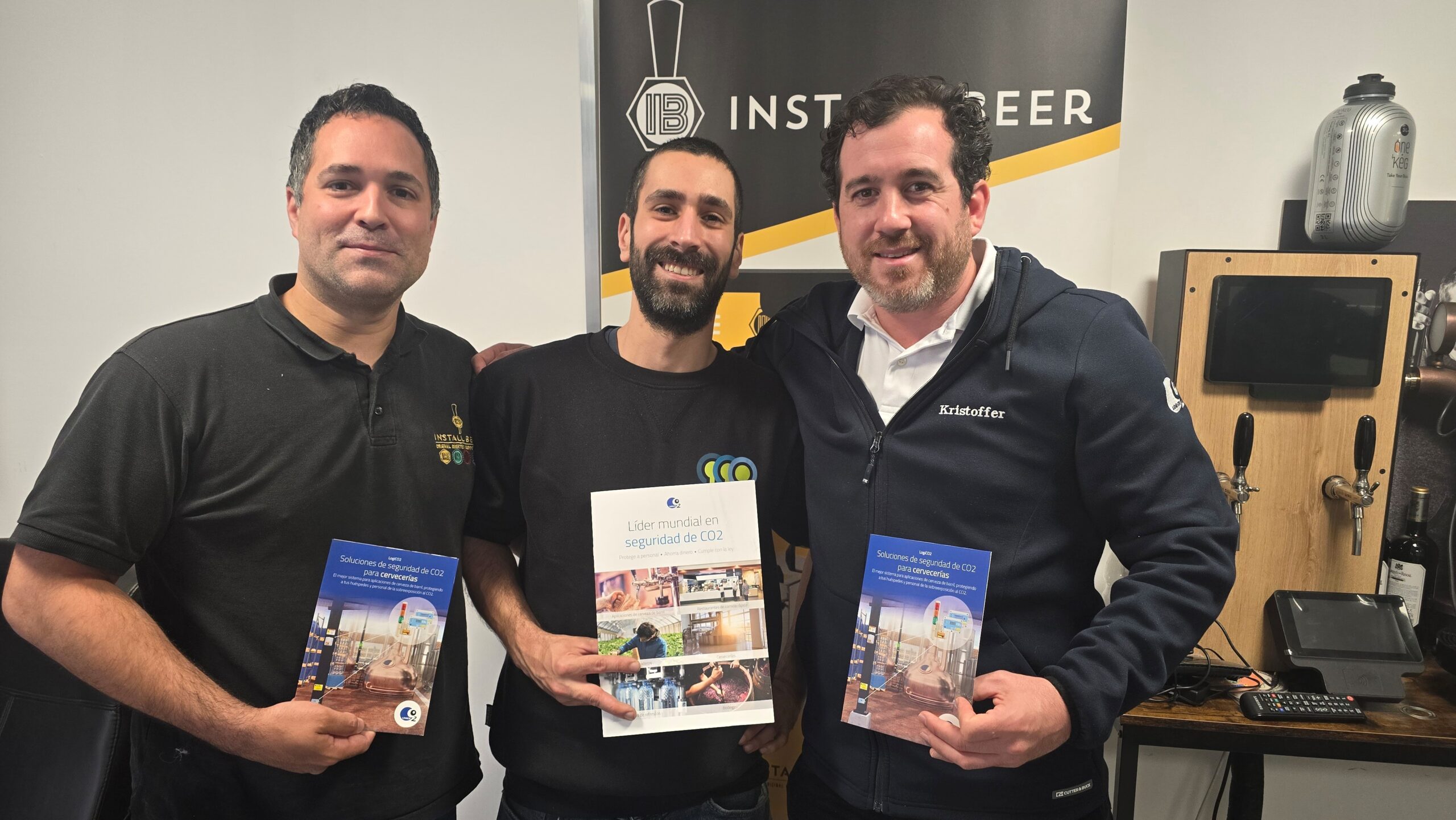
Cristian Marimon and Pol Marimon from Install Beer with Kristoffer Eklund Cuestas from LogiCO2
Install Beer was looking for a professional gas safety solution suited to the hospitality and beverage settings it knew best, and that could also scale to more demanding industrial applications. It found what it was looking for when Kristoffer Eklund Cuestas, Business Manager at LogiCO2, came across the company while traveling in Spain and paid an unexpected visit to its offices to explore a technical partnership. The interest was mutual.
According to Marimon, what appealed to Install Beer was the breadth of the safety system: “LogiCO2 wasn’t just producing a standalone gas detector. They had developed an entire safety ecosystem that can grow with each installation. Every customer and every installation is different, so that modularity fits the way we work.”
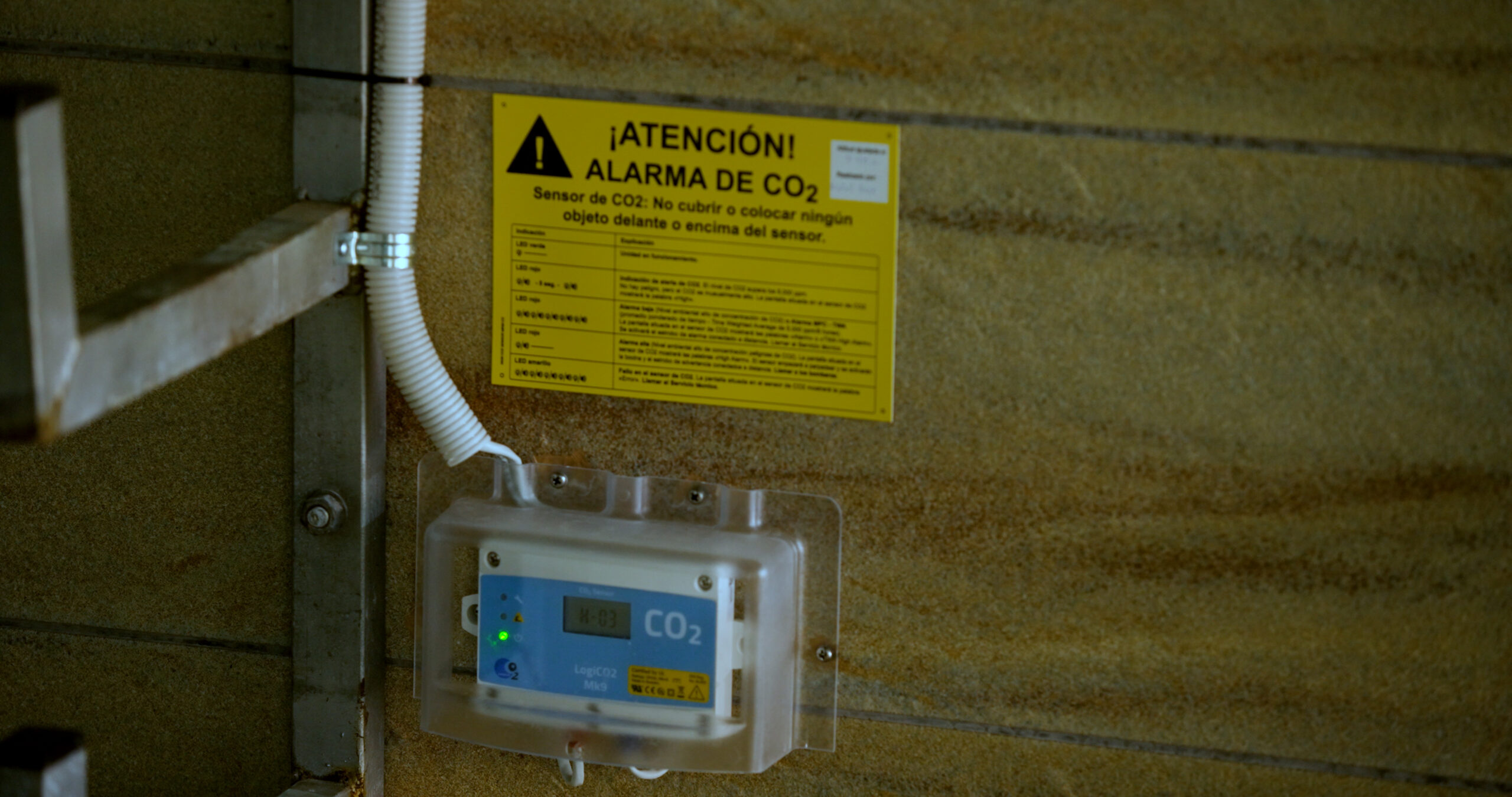
A LogiCO2 gas safety installation providing continuous monitoring and clear local warning
The human side mattered just as much as the product. Install Beer works directly with Eklund Cuestas and the wider LogiCO2 team, and the two companies solve unusual or technically complex projects together. “Our aim is to understand the customer’s risk and recommend the correct solution,” says Marimon. “LogiCO2 treats us as a technical partner rather than another sales channel, and that matches our own philosophy.”
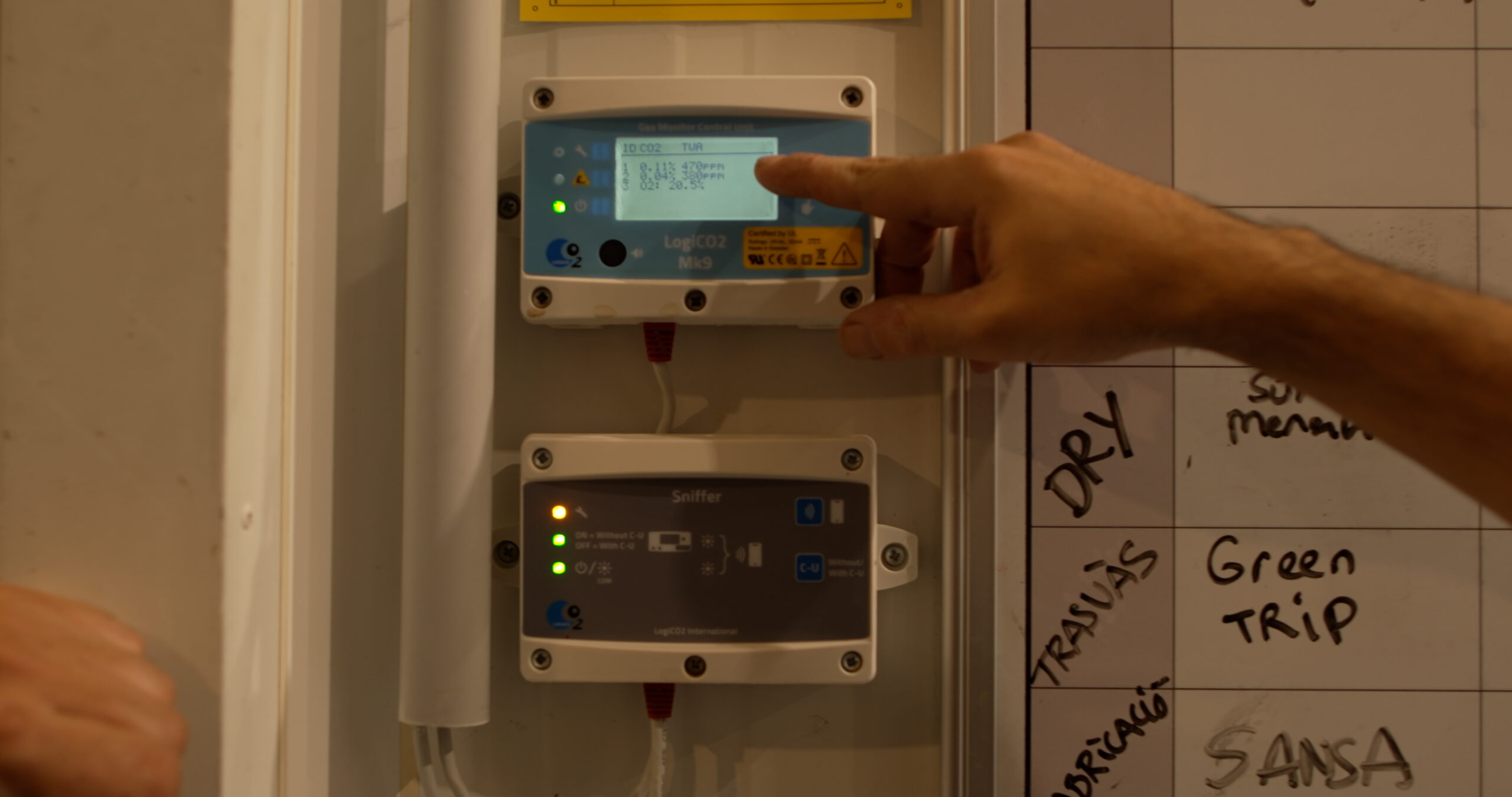
A LogiCO2 safety system in operation, providing clear gas monitoring and alarm information
A Complete Safety Architecture
The LogiCO2 range includes standalone units for simpler applications, modular systems for installations with multiple sensors and areas, and portable equipment for personal protection, inspection, and temporary measurements.
The installation architecture is practical as well. A digital plug-and-play concept makes the systems relatively straightforward to install, configure, and expand. Features such as automatic calibration under normal operating conditions and altitude compensation reduce the need for routine adjustments. Correct commissioning and periodic function checks remain essential.
For Install Beer, the wider ecosystem is particularly important. A sensor can trigger local audible and visual alarms, and through relay interfaces, the system can interact with ventilation, external alarm systems, fire panels, or building management systems. A safety valve can shut off the CO2 supply when required, and devices such as the Power Monitor alert personnel if the gas safety system itself loses power.
The portable Scout adds further flexibility. It works as a personal CO2 detector or leak-finding tool, and it can be placed in a potentially dangerous area to get a remote CO2 reading before anyone enters. This complements, rather than replaces, established safe-entry procedures.
“The range covers detection, warning, communication, and active response,” says Marimon. “It does far more than measure a gas concentration.”
Clear Obligations, Uneven Practice
A framework for managing gas risks at work already exists:
- EU: Directive 98/24/EC sets requirements for protecting workers from hazardous chemical agents, including risk assessment, prevention, and emergency arrangements.
- Spain: Law 31/1995 on Occupational Risk Prevention sets the general framework.
- Spain: Royal Decree 374/2001 on chemical agents at work requires employers to determine whether dangerous chemical agents are present and to evaluate and reduce the associated risks.
- CO2 exposure: Spain’s INSST lists a 2026 VLA-ED of 5,000 ppm for CO2, the reference value for an eight-hour time-weighted occupational exposure.
“It would be wrong to say Spain or Europe has no legislation. The framework exists, and the responsibility to assess and control these risks is clear,” says Marimon. “But there can be a gap between a general obligation to control occupational risk and a simple, sector-specific rule telling a company exactly when continuous fixed monitoring must be installed and how it should be configured. That leaves room for different interpretations between industries and installations.”
In Install Beer’s experience, implementation is far from uniform. Larger organizations with dedicated safety departments are generally well aware of gas risks and often plan detection at the design stage, while awareness at smaller sites, such as wineries, varies considerably. Some people have worked with CO2 for decades and regard it as part of their normal working environment. Others rely too heavily on ventilation, which is essential but should not automatically be treated as a substitute for gas detection when a site-specific risk assessment calls for monitoring.
A recent case underscores the importance of prevention. Following a fatal workplace accident involving a winery worker from Lanciego (Álava) in September 2026, the Basque Government reminded the wine sector of the dangers of CO2 produced during fermentation. Its statement highlighted the need for adequate ventilation, fixed or portable CO2 detection, and checking the atmosphere before entering potentially dangerous areas.
“The challenge is turning general occupational safety obligations into consistent preventive measures at every site,” says Marimon.
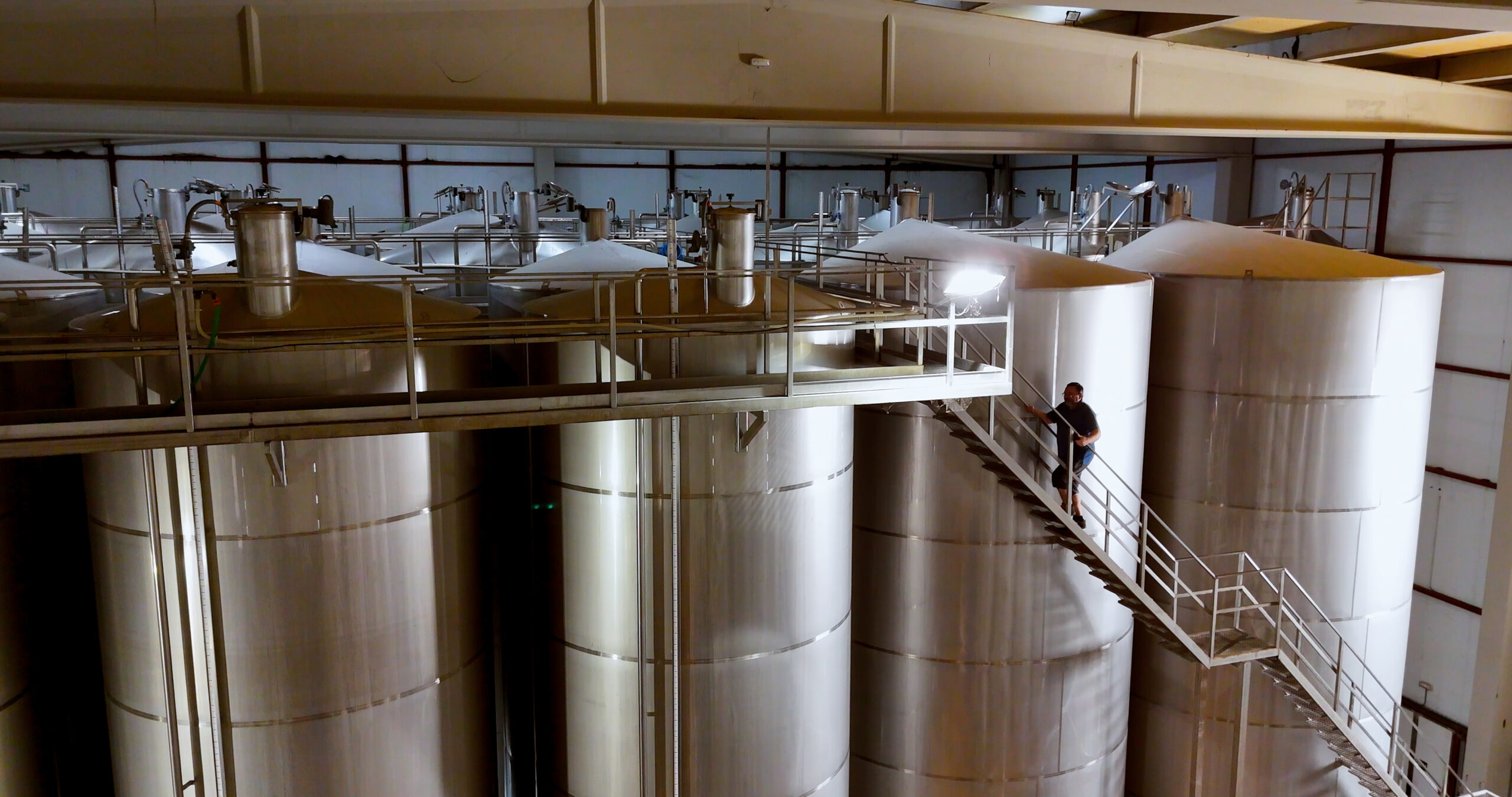
Industrial and production environments are among the applications where gas safety is becoming increasingly important
What Holds Adoption Back
In Install Beer’s view, the biggest barrier to wider adoption is awareness, not cost.
“CO2 and oxygen depletion are psychologically difficult risks because they’re invisible,” says Marimon. “When someone sees a moving machine, an exposed electrical conductor, or a fire, the danger is obvious. A room with a dangerous concentration of CO2 or too little oxygen can look completely normal.”
Other obstacles compound the problem. Some companies conclude that years without an accident mean the risk must be low. Responsibility can also be unclear, shared among gas suppliers, installers, maintenance companies, safety departments, engineering firms, and building owners, so detection can easily fall outside everyone’s scope.
Education Before Equipment
To address these barriers, Install Beer prioritizes customer education and technical awareness. It is developing dedicated LogiCO2 technical content, application guides, and selection tools to help businesses determine what protection they need.
With each inquiry, the team tries to understand the full application before proposing equipment, from the gas involved and the size of the room to ventilation, possible leak points, and where people work.
The company is also exploring work with trade organizations and professional communities, particularly in wine production.
“Education should reach companies before an accident or an inspection forces them to act,” says Marimon. “Our LogiCO2 activity is becoming as much an awareness and technical support project as a product category.”
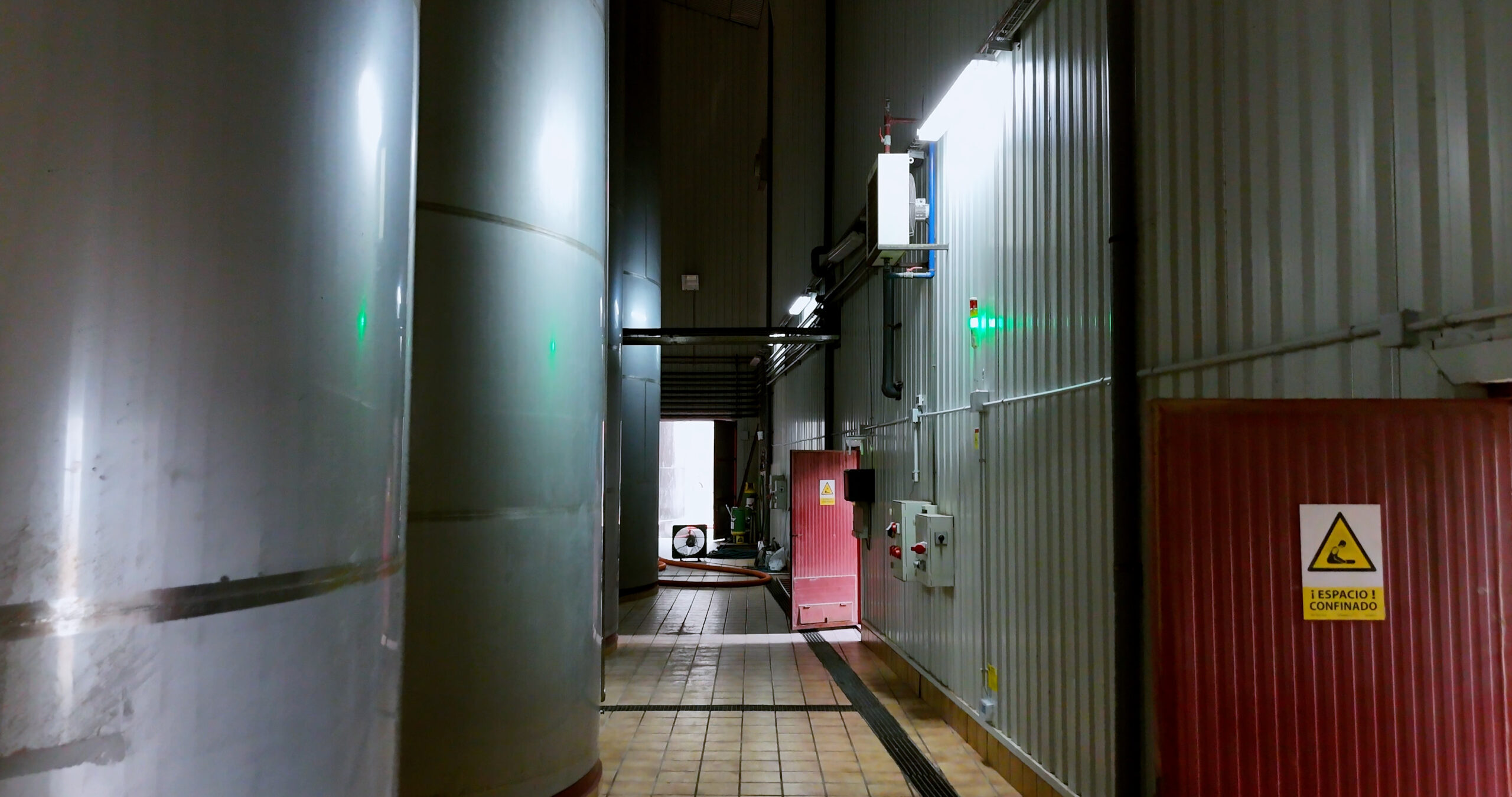
Gas monitoring in enclosed process areas helps support safer day-to-day operations
Growing Demand, Bigger Projects
“The momentum has increased considerably,” says Marimon. To date, Install Beer has supplied approximately 20 complete fixed CO2 and O2 safety systems. With additional sensors and expansion kits, these account for close to 40 fixed gas detection points. The company has also supplied several LogiCO2 Scout portable detectors.
Install Beer’s own technicians installed about 25 percent of the fixed systems. Customers’ technical or maintenance staff installed the rest, with Install Beer providing guidance and support as needed.
“That’s one of the advantages of the LogiCO2 concept,” says Marimon. “Once the application has been properly studied and the system correctly sized, qualified customer technicians can handle the physical installation and still rely on our support.”
Early projects centered on beverage dispensing, hospitality, and CO2 storage areas. Inquiries now increasingly involve wineries, breweries, laboratories, pharmaceutical facilities, nitrogen generators, cold rooms, industrial production, and larger multi-zone installations. The requests have changed as well. Rather than asking for a CO2 detector, customers want Install Beer to study their application, understand the risk, and help design a complete solution.
Once systems are running, the strongest feedback concerns simplicity. A correctly installed and commissioned system monitors the area continuously in the background without interfering with normal operations. Customers value seeing the actual gas concentration and, in multi-sensor systems, knowing which sensor or area has triggered an alarm. Clear audible and visual warnings before anyone enters a dangerous area give maintenance and safety staff considerable confidence.
“A good safety system should have very little impact on day-to-day operations,” says Marimon.
Designing Safety In From the Start
In Spain, Install Beer aims to become a recognized technical reference for CO2 and O2 safety across the sectors it serves. Its online technical support and logistics infrastructure also let it serve customers across Europe, a part of the business it plans to keep developing.
“A good result wouldn’t simply be selling more sensors,” says Marimon. “It would be reaching the point where any brewery, winery, restaurant, laboratory, or industrial facility using significant quantities of CO2, nitrogen, or other gases automatically considers gas detection when the installation is designed, not after an incident has already shown that the risk exists. When gas safety is part of the first conversation, we’ll know the market has changed.”
The company would like to see clearer, more consistent practical guidance across sectors. Risk should always determine the design, but companies need clearer criteria for when continuous detection is appropriate or necessary. Those criteria could weigh the gas type, the quantity stored or generated, room volume, potential leak points, ventilation, whether people work in the area, and whether it could become a confined space.
Install Beer also wants more emphasis on the complete system: correct detector placement, local and external alarms, warning signage, safe access procedures, staff training, periodic function checks, and, where appropriate, automatic ventilation or gas shutoff.
For business owners who have not yet considered the issue, the company’s message is simple.
“You can’t rely on your senses to tell you whether the air around you is safe,” says Marimon. “If your business stores, generates, or uses these gases in enclosed or partially enclosed spaces, don’t ask whether you’ve had an accident before. Ask what would happen if a leak occurred tomorrow. The investment is relatively small compared with the human cost of someone walking into an unsafe atmosphere without knowing it. Gas detection belongs alongside every other fundamental safety system. Hopefully it will never be needed in a real emergency. But if it is, it must already be in place.”
Meet the Team

Barcelona, home of Install Beer
Click to download this article
For more information about LogiCO2 safety systems, visit www.logico2.com, email info@logico2.com, or call +46 (0)31-695317. To contact Install Beer (official LogiCO2 distributor), visit www.installbeer.com, email logico2@installbeer.com, or call +34 933 464 656.